- Farmers in Béjaïa, on Algeria’s Mediterranean coast, have been affected by drought in recent years, depressing their harvests and discouraging them from investing in expansion.
- In 2018, Keltouma Adouane bought a kilo of crocus saffron corms; experts doubted they would thrive in Béjaïa’s coastal climate, but she succeeded in growing them and now sells a range of saffron products to local buyers.
- She is working with other women in this province, where agricultural income has stagnated, to develop cultivation and marketing of this valuable crop.
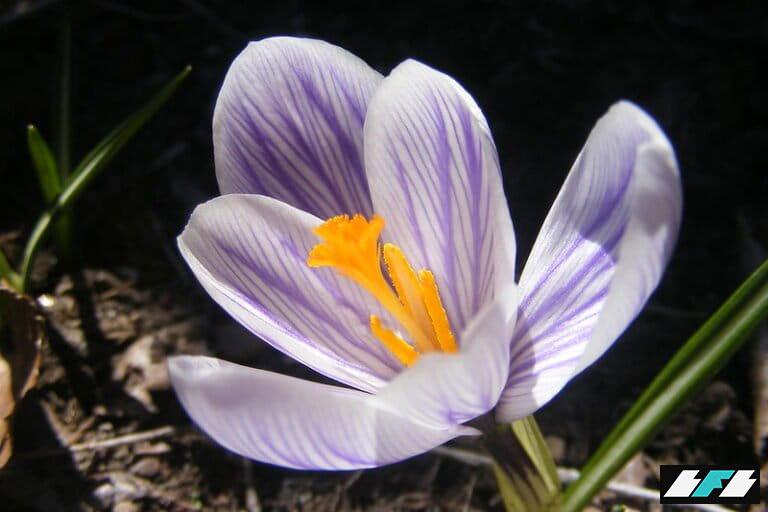
The world’s most expensive plant, saffron, is as delicate as it is valuable. Each purple flower blooms for less than three weeks a year, and only its three tiny, fragile red stigmas are edible. Harvesting them is a painstaking process: picked by hand at dawn and dried with extreme care, as even the slightest pressure can dull their aroma and flavor. It takes nearly 200,000 flowers to yield a single kilogram of dried saffron, just over 2 pounds, and the plant may take up to two years to flower.
In 2015, Algerian schoolteacher Keltouma Adouane fell seriously ill; a saffron-infused drink was an important part of her recovery and continued health, she told Mongabay, but it was very expensive in the Béjaïa region where she lives. So she decided to experiment with growing her own saffron from bulbs.

“I planted them and after waiting for almost two months, the result was there. And to tell you the truth, the result was truly spectacular. I was really fascinated. I couldn’t believe what I saw when I saw the big purple carpet of flowers that emerged from the ground.”
Adouane bought more saffron bulbs and joined the Association of Rural Women of Béjaïa (AFUD), an Algerian nonprofit that supports rural women’s projects related to crafts, farming and food sovereignty, and links them to markets. She took training courses in mushroom cultivation, cheesemaking and cosmetics production alongside other enterprising women.
Algeria’s mostly rural Béjaïa province is home to 388,000 people. Most farmers tend olives, figs, cereals and vegetables, and raise livestock.
There’s plenty of work on the region’s small farms, yet prosperity remains out of reach for many households. Adouane has established a small collective of women transforming the landscape by cultivating saffron wherever space allows — and turning it into soaps, cosmetics and health supplements.

Adouane spoke with Mongabay from Béjaïa about her tireless search for ways to expand the sector amid the challenges of a changing Mediterranean climate. The following interview has been translated from French and edited for length and clarity.
Mongabay: How does saffron farming support better livelihoods and help adapt to climate change?
Keltouma Adouane: Saffron is really valuable. It’s known as “red gold” and can sell for 70,000 euros per kilogram [about $37,000/lb]. Farmers can buy a kilogram of bulbs for 40 euros [$21/lb].
Saffron is a great crop for these times of global warming. Climate change has greatly affected our region of Béjaïa because many farmers now hesitate to embark on large-scale planting of any crop due to the lack of rain. We experience drought and farmers have lost a lot of their harvests.
This doesn’t mean that saffron is easy to grow here in Béjaïa. This is a mountainous area and there isn’t much flat land. Although saffron doesn’t need to be planted on flat land, it’s much more labor-intensive to plant huge plots of saffron on mountains.
Mongabay: What were the biggest challenges you faced in those early years, and how did you overcome them?
Keltouma Adouane: When I decided to cultivate saffron, I sought the advice of some agricultural experts and connoisseurs. They told me that because our climate is Mediterranean, and Béjaïa is a coastal town, saffron would not succeed because we have a very high humidity level. Saffron prefers the climate of inland, mountainous areas where the temperatures are cooler at night and summers are dry, rather than humid.
But I took a chance. Our challenge now is how to expand the saffron fields because every three years I have to extract the bulbs buried underground to replant them further.
A lot of land is needed to obtain the quantity we need. For example, to grow 5 kilograms of saffron bulbs needs 5 hectares of land [about 0.9 lb/acre].
A lot of patience is required during the flower harvest. The flowers have to be hand cleaned, extremely gently. It’s artisanal work, meaning everything is done by hand, which requires courage and stamina.
Once my first saffron crop grew well, I decided to share this wonderful experience with other women.
We were fortunate enough to be around professors at the University of Béjaïa who were researching saffron in Algeria. They conducted research on saffron to do the first thesis on saffron [analyzing] 12 samples which were all cultivated by the rural woman of Béjaïa.
That thesis was a major turning point for us because it was from there that we discovered that our crop was a very, very high-quality saffron.
My God, that gave all of us the courage to continue cultivating. Today, 25 rural women of Béjaïa are involved and we produce cosmetics and saffron-infused cheese.

Mongabay: Who buys the saffron from Béjaïa, and what do these buyers use it for?
Keltouma Adouane: Real saffron is not really available in our area of Béjaïa. There is only fake saffron coloring, which is sold in herbalist shops. But since herbalists discovered my saffron, they come directly to my place to buy it. Herbalists from outside of Béjaïa and women who make natural spice mixtures also come to buy my saffron.
Fitness clubs buy it to use as dietary supplements, and it can also be used in strong cosmetic products.
So far, I’ve managed to sell my merchandise. But when I’m in contact with other saffron farmers from other regions, they say they have trouble selling their saffron.
Mongabay: You’ve trained and involved many women from your region in saffron cultivation and related projects. Why are you bringing women specifically into saffron cultivation, and how has this presented opportunities and obstacles?
Keltouma Adouane: Because we lack land, I wanted to find a high-value crop that rural women could cultivate at home. I decided to work specifically to empower women because they are the people who can involve their entire families in saffron cultivation and turn it into a family culture.
I also involved women because it takes a lot of time and patience to obtain this golden spice.
It’s a real ant’s work.
The 25 women I am working with now are all highly motivated and really enthusiastic because we had a good saffron harvest thanks to the rain. We’ve also been able to travel to local product exhibitions in Algeria and sell all the saffron products we’ve produced.
Mongabay: What is your long-term vision for saffron cultivation in your region? How do you plan to sustain and expand your project?
Keltouma Adouane: My vision for the future is to involve more women who don’t have an income in this culture of saffron production and to expand our line of saffron products. This will help change the lives of many families.
Algeria is a vast and large country and we’re currently expanding saffron farming to the south. I’ve just experimented with a female farmer from the Algerian Sahara, planting saffron in oases. It gave a magnificent result!
I’m also working to expand education and training opportunities in saffron cultivation and processing to many more rural women in the future.
Sustaining the project will be possible. The Algerian government has realized the importance of saffron cultivation to help bring foreign currency into the country. For this reason, since 2024, they have added saffron as a new agricultural sector in the country. This means we should be able to access a lot more support for our work.