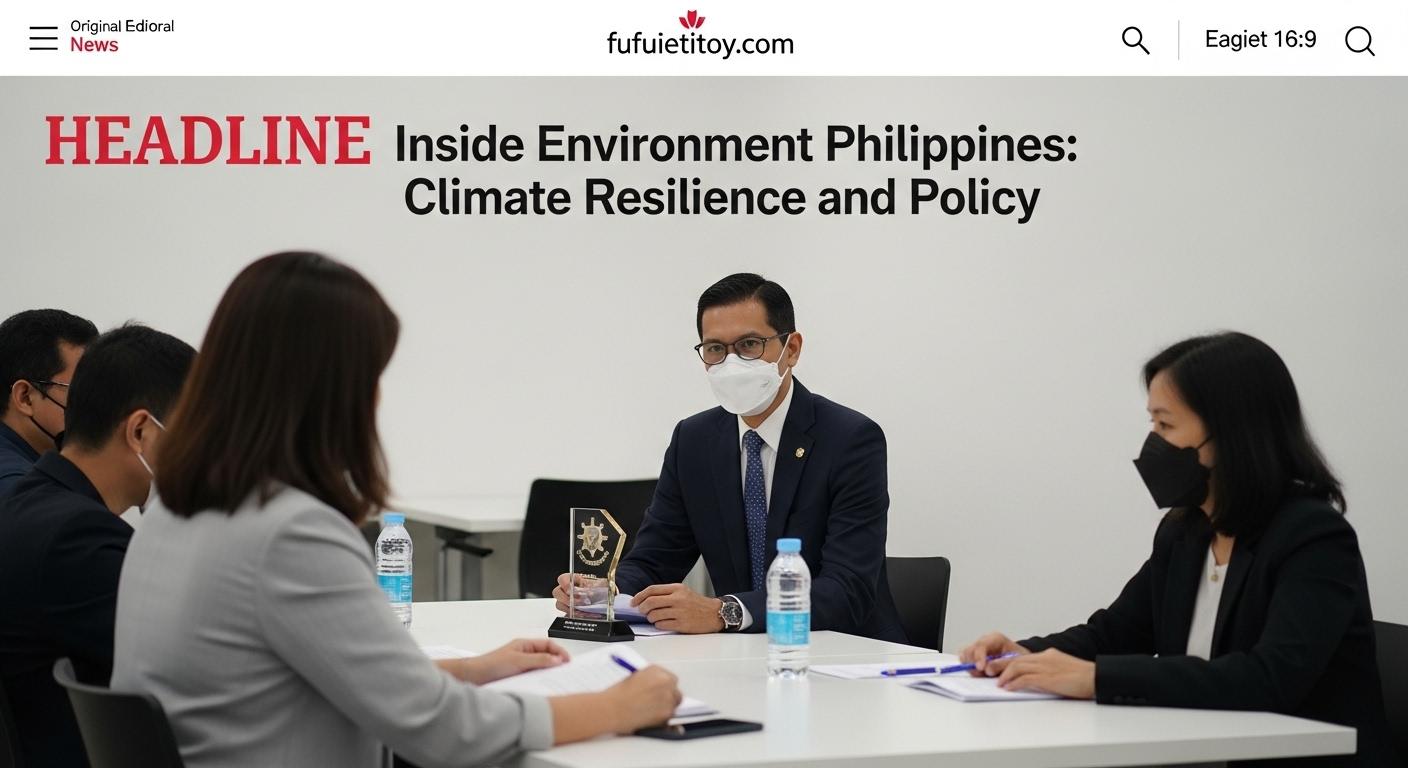
Inside Environment Philippines, this analysis looks beyond headlines to examine how climate risks, governance gaps, and local innovation interact to shape the country’s environmental future. By placing policy, science, and community action in one frame, we can trace how decisions at municipal halls and boardrooms ripple through households and ecosystems.
Context and Stakes
The Philippines sits in the front line of climate variability. Its archipelago structure, coastal communities, and dense urban centers are exposed to typhoons, storm surge, and rising seas. Beyond the dramatic events, chronic stressors—polluted waterways, mangrove loss, land-use change, and unequal access to resources—undercut long-term resilience. Inside Environment Philippines, resilience is not a single project but a system of governance, finance, and daily behavior. The stakes are measured in lives saved during storms, crops secured during drought, and the stability of family incomes in disaster-prone regions.
Environmental risk multiplies when data are patchy, planning timelines lag behind climate signals, and local voices outside city centers are underrepresented. The result is a mismatch between vulnerability and the policies designed to reduce it. However, the same localities that bear the risk also host practical experiments in adaptation—from watershed management to city-scale cooling strategies—that can scale if supported by coherent funding and transparent metrics.
Causes and Consequences
Several drivers converge to shape environmental outcomes in the Philippines. Rapid urbanization increases exposure to heat, flood, and waste challenges in cities. Dependence on fossil fuels for power, transportation, and industry compounds emissions and air pollution, while informal settlements strain drainage and sanitation systems. Deforestation and land conversion erode watershed protection, increasing sedimentation in rivers and reducing biodiversity.
Consequence is not only ecological but economic and social: disrupted farming, higher medical costs from pollution-related illnesses, and heightened disaster relief needs after storms. When households face repeated shocks, credit and food security erode, creating a cycle that can be hard to break without targeted social protection and climate-smart investments.
Policy and Practical Responses
National policy frameworks, including climate-change acts, disaster-risk reduction guidelines, and energy policies, provide a scaffold for action. Yet policy effectiveness depends on alignment with local conditions, citizen engagement, and long-term funding. Local governments that adopt risk-informed land-use planning, integrated water resource management, and green infrastructure—such as permeable pavements and urban wetlands—tend to better absorb shocks and maintain service delivery during extreme events. At the same time, increasing transparency around project outcomes helps communities hold institutions to account and refine approaches over time.
Practical steps also emphasize the transition to cleaner energy, resilient infrastructure, and nature-based solutions. Microgrids in off-grid communities, solar-powered pumping stations for irrigation, and pricing mechanisms that reflect true environmental costs can steer investments toward sustainable outcomes. The challenge remains ensuring these measures reach underserved communities, where the benefits can be most transformative.
Innovation and Community Resilience
Innovation is not exclusive to laboratories; it occurs in urban rooftops, neighborhood farms, and municipal halls. The Philippines has seen experiments in controlled-environment agriculture—including the country’s first indoor vertical strawberry farm—demonstrating how compact, water-efficient farming can open new land-use pathways in congested cities. Other ventures combine rainwater harvesting, waste-to-energy pilots, and community weather stations to empower residents with real-time information. When local groups co-design solutions with residents, clinics, schools, and markets, they not only defend against shocks but also nurture livelihoods tuned to climate realities.
Resilience also hinges on social infrastructure: disaster drills that reach marginalized communities, inclusive early-warning systems, and financial products that help households recover quickly. The private sector’s role—ranging from climate-smart supply chains to sustainable financing—complements government programs and civil society campaigns. Together, these strands create a mosaic of adaptive capacity capable of absorbing, rather than merely resisting, climate stressors.
Actionable Takeaways
- Individuals: reduce single-use plastics, conserve water, and support local green businesses that invest in climate-resilient practices.
- Communities: organize neighborhood-level DRR committees, pursue rainwater harvesting, and pilot small-scale urban farming to diversify food sources.
- Policy and Government: strengthen data-sharing, fund nature-based solutions, and empower local authorities to implement risk-informed land use and infrastructure planning.
- Business and Finance: adopt circular economy strategies, back climate-smart supply chains, and invest in scalable green technologies such as decentralized energy and water reuse.
Source Context