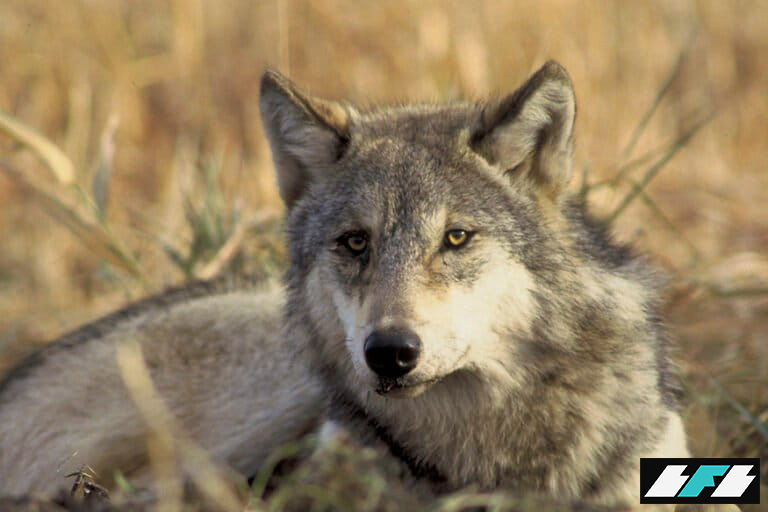
- California’s expanding gray wolf numbers — a conservation success for an endangered species — have worried ranchers in recent years as wolf-related livestock kills mount.
- Some ranchers are adapting to the changing landscape, using short-term nonlethal deterrents, some of which are funded by a state compensation program.
- A few ranchers are exploring long-term approaches, such as changing their ranching practices and training their cattle to keep them safe from wolves.
- While change is hard, ranchers acknowledge that learning to live with the new predator is the only way forward, and it pays to find ways to do so.
A lone gray wolf (Canis lupus) named OR-7 — then a 2 ½-year-old male — created history when he crossed over the state line from Oregon into California in 2011, becoming the first wolf to set foot in the state after nearly a century. His arrival, followed by his descendants who then established new packs, became a thumping conservation success for an endangered species in present-day California.
Meandering the vast wilderness that straddles the border between the two states, OR-7 visited a few ranches in northern California on his 4,830-kilometer (3,000-mile) journey, including Mark Coats’ place in Siskiyou County. Coats, who was recuperating from an injury at the time, vividly remembers that visit. He’s raised cattle for more than five decades now.
“My neighbor came over and said, ‘Mark, there’s a wolf on your ranch. Don’t shoot it. They’ll put you in jail,’” Coats said. That night, he found OR-7’s footprints on his property.
Various predators had killed his cattle over the years: coyotes (C. latrans), black bears (Ursus americanus) and mountain lions (Puma concolor). But wolves were new. After the last gray wolves were shot down in the 1920s, generations of California’s ranchers raised their cattle without having to worry about — or prepare for — this predator in their landscape. OR-7’s visit panicked Coats and his fellow ranchers.
“I was already losing five calves a year to predators,” Coats said. “I was really worried about [how] the wolves would impact me.”
While OR-7 left the ranch — and California — without killing any cattle, the same can’t be said of his descendants. With nearly 70 wolves in 10 packs now spread across the state, losses are mounting: Some 142 cattle have been killed over the last decade, between 2015 and 2024, with a marked increase in the last three years as wolf numbers jumped from 18 to 50. In 2025 alone, ranchers have lost 181 livestock to wolves. It’s put the endangered predators at odds with ranchers, and pitted conservationists against livestock producers. In late October, California authorized its first killing of ‘problem wolves’, eliminating four individuals from the Beyem Seyo pack that had taken down at least 88 cattle between January and October 2025.
A GPS-collared female wolf in the Lassen pack, California. The California Department of Fish and Wildlife uses location data from collared wolves to alert ranchers in the area. Image by California Department of Fish and Wildlife via Wikimedia Commons (CC BY 2.0).
Instead of wishing the wolves away, some ranchers like Coats have been preparing for a future with the canids. They have explored wolf behavior, learned new ways of ranching and they use a wide variety of deterrents to keep their livestock safe from predators.
The state has also taken an active role. The California Department of Fish and Wildlife (CDFW), the agency responsible for wolf management, has been working with ranchers since 2021, compensating them for wolf-related livestock kills and funding ways to deter wolves without harming them. The agency has also developed a public information system to track GPS-collared wolves and alert ranchers in real time if they are in the area.
“With wolf-livestock conflict mitigation, there isn’t really a silver bullet,” said researcher Brooke Jacobs at the wolf-advocacy non-profit Team Wolf. Jacobs grew up and works with ranching communities as part of her job, where she has developed a toolkit to prevent wolf-livestock conflicts. Coexistence requires trial and error, she said, and ranchers need to find what works for their individual ranch, for their landscape and for their livestock.
Short-term mitigation methods
California has been wolf-free for nearly a century, and generations of ranchers now graze their cattle on open rangelands for months at a time. That’s not the best practice with predators like wolves around, said wolf biologist Amaroq Weiss at the Center for Biological Diversity.
Recent research has shown that wolves and their prey perceive humans as super predators and fear us more than we fear them. Since they generally avoid humans, ranchers can revert to the old ways of protecting cattle: hiring range riders who monitor and travel with a herd on horseback. “It [also] allows them to see if they have any animals that are sick or injured that they should pull off the range so that they won’t draw in wolves and other predators,” Weiss said.

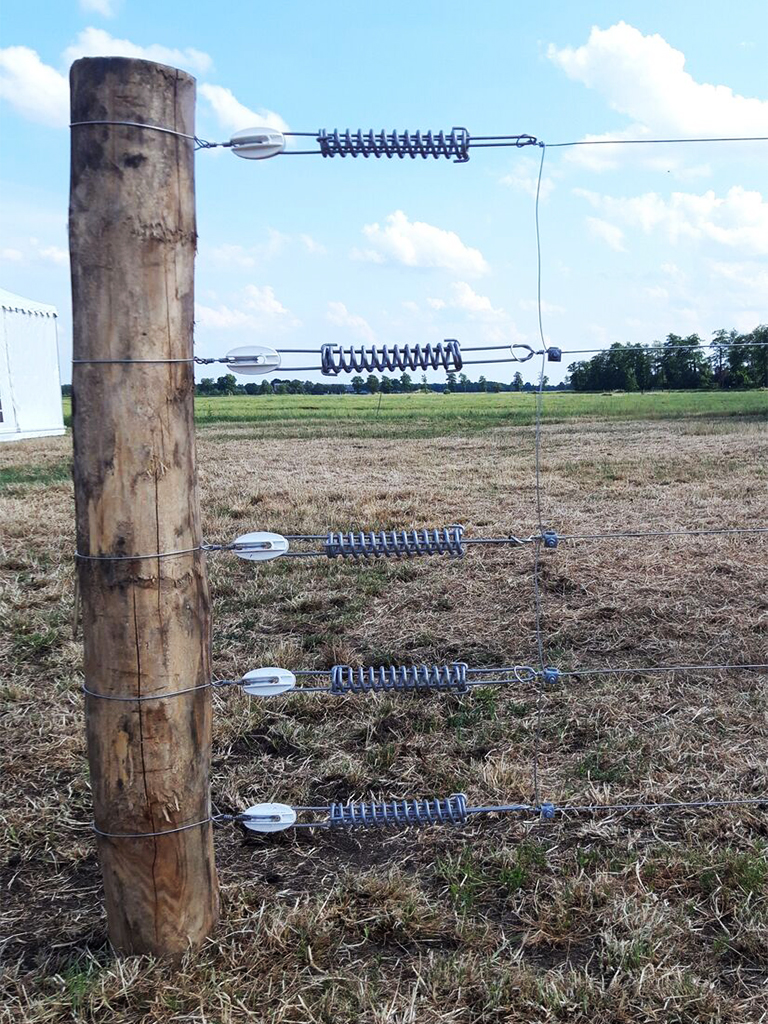
Numerous mitigation methods are available. Installing fences around areas where cattle corral — an age-old practice still followed in many parts of the world — can keep predators such as wolves and bears away. Some ranchers use electric fences or combinations of wire mesh and electric fencing to zap prowling predators and keep them away. On large ranches where permanent fences aren’t an option, ranchers use portable fencing.
Most American bovine breeds don’t have horns, unlike their wild ancestor, the Eurasian auroch (Bos primigenius primigenius). Nearly 92% of beef cattle are naturally hornless breeds, and about 94% heifer cattle are dehorned as calves. These cattle can’t defend themselves against wolves, Weiss said, making them easy targets. In contrast, only about half of cattle in Europe are hornless, where wolves outnumber those in the U.S. but kill fewer livestock (about 0.0002% cattle killed each year). Some researchers suggest horns may have given European cattle an edge over predators.
Wolves are also neophobes: they run away from anything new. Some ranchers deter wolves by hanging fladry along fences. When the wind blows, these strips of red or orange fabric flap in the breeze and act as a psychological barrier for the wolves, Weiss said, akin to farmers using scarecrows for birds. Radio-activated guard boxes are another strategy, where devices hung on fences play loud sounds and flash bright lights when collared wolves approach.
Coats swears by his DIY dollar-store “scent hangers” — polyester socks dipped in fabric softener that he hangs on trees. “When the unnatural smell hits the wolves’ nose, it causes them to stop, lock their feet and analyze that scent,” Coats said. “Then, instincts kick in and they run away.”
Funding from CDFW and other sources is available to offset the costs of using these deterrents, and ongoing research will continue to offer additional strategies.
Technology is also playing a key role in keeping wolves at bay. In southwest Oregon, scientists have used drones — sometimes blaring loud rock music or a recorded human voice on speakers — to chase wolves away from cattle. The results of this trial study are promising: just two cattle deaths in 85 days compared with 11 deaths in 20 days without drones.
Fourteen wolves have been fitted with GPS collars, allowing CDFW biologists to follow their movements. In May, the agency launched a publicly available automated mapping system that tracks these wolves in near-real time. The agency previously alerted ranchers about wolf movements around their ranches with phone calls and text messages. Now, it uses collar data to post wolf locations on a website. Axel Hunnicutt, the agency’s gray wolf coordinator, said the map provides the opportunity for ranchers to intervene.
But nonlethal deterrents only work for a short while, typically two months, before wolves understand what’s going on, which means they can be great for an emergency response, Jacobs said. She emphasized that the real solution is adopting long-term changes to how ranchers raise their livestock.
Long-term changes to ranching
When wolves hunt, they typically go after the sick, weak, malnourished or the young. These animals are easy to chase, isolate and bring down. Keeping herds healthy is key to protecting them from depredation.
Some ranchers are trying the “low-stress stockmanship” approach, herding their cattle in a way that doesn’t create fear or panic, allowing them to react calmly. Coats uses an improvised technique, inspired by a practice used in Botswana: painting “eyes” on cows’ backs, which makes lions and other ambush predators think they’ve been seen, an intervention that makes them abandon their attack.
Using dogs, Coats has trained his cattle to herd together and face a wolf instead of running away. “Canines require the chase… If we can instill in our cows to turn and face [the predator], then we interrupt the chase sequence, which effectively saves the cow,” Coats explained. His approach, which he teaches to others, has worked wonders. He’s lost just two cattle to predators since 2014, he said. “I’ve gained 68 calves to my bottom line for my efforts.”
Many ranchers have livestock guardian dogs — specific dog breeds bred to chase away predators and protect livestock by barking or fighting — with their herds.

Another effective strategy is shifting calving time to coincide with the birthing season for elk and deer. Studies suggest that wolves prefer natural prey, particularly deer and elk, and go after livestock only when they don’t have enough to eat. Changing the calving season, Jacobs said, would lower the hunting pressure on livestock, as wolves have plenty to eat. Another benefit to synchronizing calving into a tight window is that it allows ranchers to use short-term mitigation methods to protect newborns.
One of the biggest draws for wolves is cattle carcasses left behind in “bone piles,” which attract all kinds of scavengers. In California, ranchers can legally bury dead cows on their property within about 5 km (3 mi) of where they died. However, this is impossible during the winter months when the ground is frozen and is extremely challenging in rocky terrain. Ranchers can haul a carcass to a licensed facility, but they are often few and far between, and it’s costly.
Until recently, California did not permit composting mammalian tissues, where the carcass is mixed with dry organic material such as wood shavings, mulch or crop residue and mixed in a bin, which is later converted to humus.
In the last few months, an unlikely coalition of ranching lobbies, including the dairy industry group, California Cattlemen’s Association (CCA), and wolf-advocacy organizations like the Defenders of Wildlife, supported legislation to make composting legal. Bill AB411, the Caring About The Terrain, Livestock and Ecosystems (C.A.T.T.L.E) Act, which legalizes on-farm composting, was signed into law by Governor Gavin Newsom in October. A recent study has shown that compost piles are a better way to dispose of dead cattle than bone piles; they reduced predator visits from more than 300 a year to just eight.
“We want to reduce attractants to benefit wolves, to benefit livestock producers,” Kirk Wilbur, vice president of government affairs at CCA, said.

With wolves now being permanent California residents that are expanding across large swathes of wolf habitat, ranchers must adapt. The good news is that Jacobs has seen an increasing willingness among livestock producers to change their practices.
“I think a lot of ranchers want to find a solution here,” she said. “Sometimes ranchers can be painted as the enemy in this, and I don’t think that they are. She added that “Many ranchers don’t hate wolves, but don’t want their livestock to be killed.”
But changing years-old practices is hard, Coats said. “We may not like a group of cows getting killed by lightning, but we can’t do anything about it,” he said, but with wolves, ranchers can mitigate their risks and reduce their losses. “If you make the effort, the reward far outweighs the cost.”


About the Author