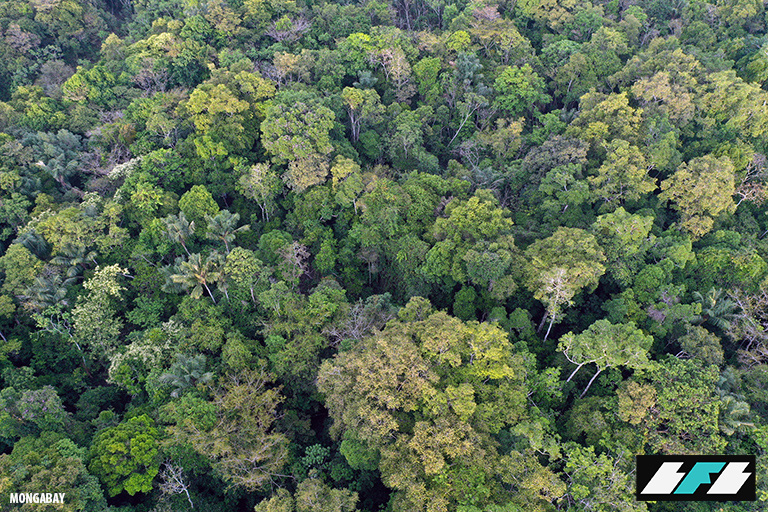
- A new alert system developed by online deforestation-tracking platform Global Forest Watch tells users what’s causing the deforestation.
- The new alert system deploys AI models to classify deforestation alerts based on what’s causing them, from agriculture (large- and small-scale), to mining and wildfires.
- While the data currently focus on the Amazon Rainforest, Congo Basin and Indonesia — home to most of the world’s tropical rainforests — the team plans to expand to other forests as well as non-forest ecosystems.
Forest logging decreases during rainy seasons. Deforestation caused by mining might not be as seasonal as previously thought. One of the largest drivers of deforestation in Latin America is large-scale agriculture; in the Congo Basin, it’s small-scale agriculture.
These are some of the highlights from a new data set and alert system that shed light on the myriad drivers of deforestation in the tropics.
Online deforestation-tracking platform Global Forest Watch (GFW) has, for years, tracked forest-cover loss around the world in real time. The tool has proved useful to conservationists, scientists and local communities. To date, however, the platform only alerted users to deforestation events — but not about what caused those events.
The newly launched drivers of deforestation alerts system uses artificial intelligence models to classify deforestation alerts in the Amazon, Congo Basin and Indonesia — home to nearly all of the world’s tropical rainforest cover — based on what might be causing them.
“Until recently, we haven’t known what’s been causing the disturbances,” Sarah Carter, research associate at GFW, told Mongabay in a video interview. “Knowing that gives a lot of information to users who either want to take action or want to investigate if it’s something potentially illegal.”
In fact, it was feedback from users that prompted GFW to work on developing the new alert system. While information on tree cover loss is extremely useful, it often takes a lot of time and effort to visit the location and investigate the reasons behind it.
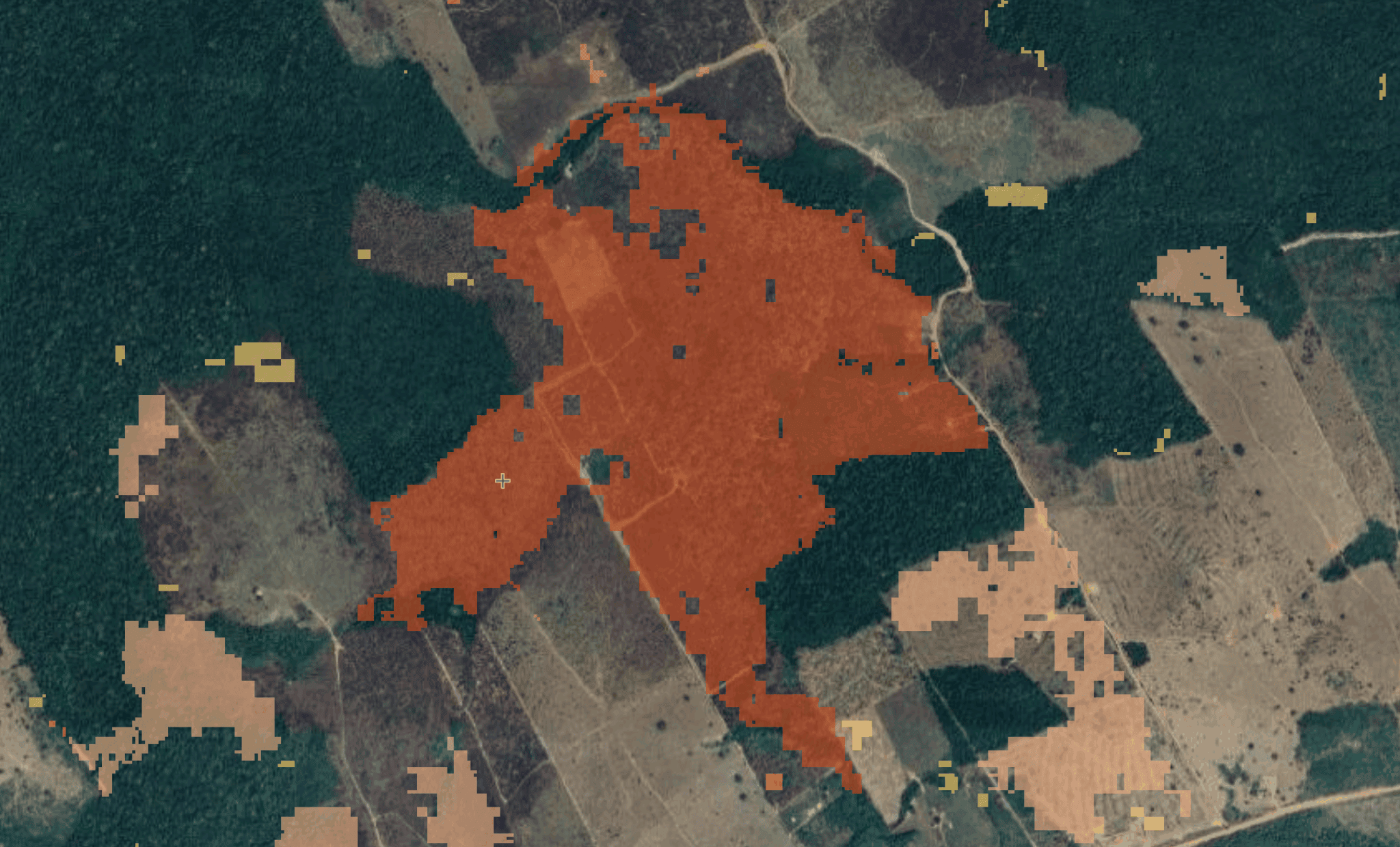
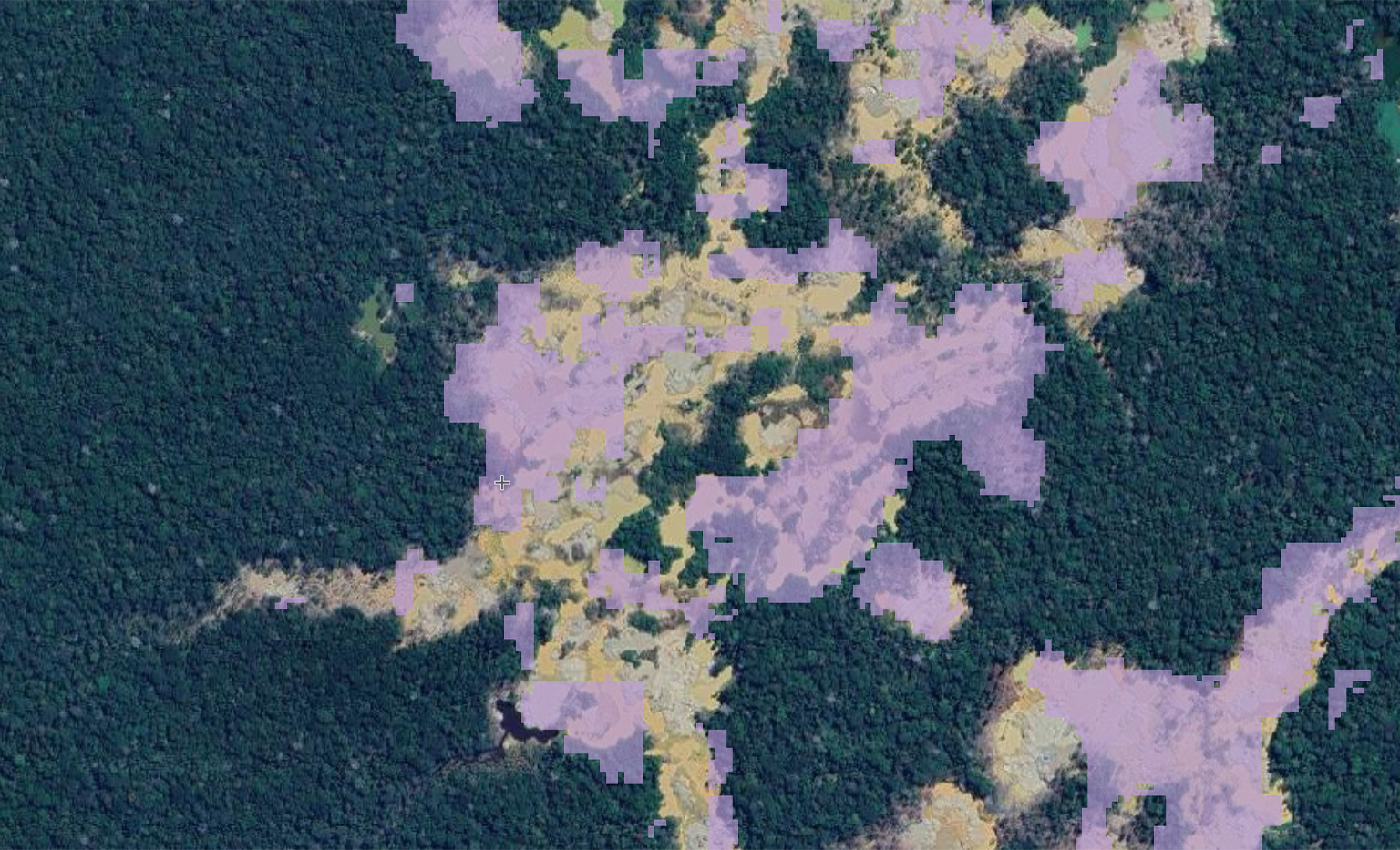
“People might go to the ground thinking it was mining in an area where it isn’t permitted, and then find out it was agriculture which is allowed,” Carter said. “Knowing the exact driver will enable them to make better decisions on how they spend resources on the ground.”
The model classifies alerts based on 10 different drivers of deforestation. This includes small-scale agriculture, large-scale agriculture, road construction, mining and wildfires.
To develop the new alert system, the team at GFW used a deep-learning model that was built by Wageningen University for Suriname, the Republic of Congo and the Democratic Republic of Congo. The model was then trained with forest disturbance data from the rest of the Amazon, Congo Basin and Indonesia.
It uses information on the landscape like elevation and slope to determine the potential causes. For example, it can detect that the cause is likely to be a landslide, and not agriculture, in a location that’s on a slope. It also takes into account the shape of tree cover loss. “In clearings like in large-scale agriculture, you can see obvious field patterns and the model takes that into consideration,” Carter said.
The driver data are currently available for deforestation alerts detected from 2022-2024. They confirm some well-known facts, including how logging events declined during rainy seasons. They were also able to find links between different drivers of deforestation. “We can see that road developments will often lead to logging or mining,” Carter said. “You can monitor this and perhaps anticipate another driver happening.”
The next step, Carter said, is to make the data available to users as monthly updates. GFW are also plans to expand the data set beyond the three locations currently being focused on, including to non-forest ecosystems, grasslands and shrublands.
Apart from being used for conservation and forest-protection purposes, Carter said, the platform can be adopted by companies trying to demonstrate sustainability in their supply chains. “If the companies can know that disturbances are happening, that’s something they can choose to investigate,” she said.


About the Author


