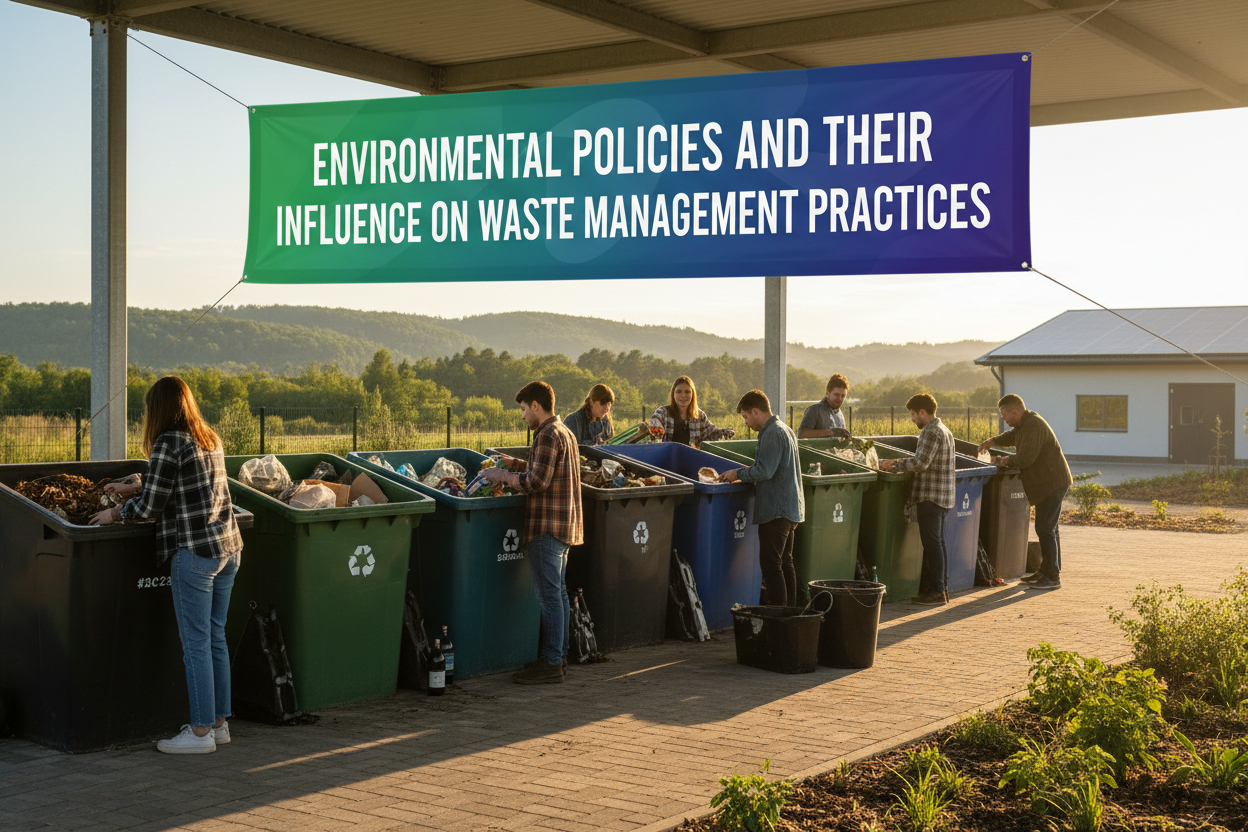
Environmental Policies and Their Influence on Waste Management Practices
In recent years, environmental policies have become a cornerstone in shaping modern waste management practices. As the world grapples with the escalating waste crisis, governments and organizations are implementing strategies to mitigate environmental impact and foster sustainable practices. This article delves into the intricate relationship between environmental policies and waste management, exploring how these regulations influence practices globally.
Understanding Environmental Policies
Environmental policies are regulations and principles that guide actions aimed at protecting and preserving the natural environment. These policies address various issues, including air and water pollution, climate change, and waste management. They are designed to encourage sustainable practices, reduce environmental footprints, and promote conservation.
Environmental policies can be enacted at different levels, from local government ordinances to international agreements. For instance, the United Nations Sustainable Development Goals provide a global framework that encourages countries to adopt sustainable waste management practices, among other objectives.
The Role of Environmental Policies in Waste Management
Waste management involves the collection, transportation, processing, recycling, or disposal of waste materials. Effective waste management is crucial for reducing pollution, conserving resources, and protecting human health. Environmental policies play a significant role in shaping these practices by setting standards, providing guidelines, and enforcing regulations.

For example, the European Union’s Waste Framework Directive sets the legislative framework for waste management within the EU. It emphasizes the waste hierarchy, prioritizing waste prevention, reuse, and recycling over disposal. This directive has significantly influenced national waste management strategies across Europe.
Key Environmental Policies Impacting Waste Management
- Extended Producer Responsibility (EPR): EPR policies make manufacturers responsible for the entire lifecycle of their products, including post-consumer waste. This approach encourages companies to design products with recycling and end-of-life disposal in mind.
- Landfill Directives: Many countries have implemented laws to reduce landfill usage due to its environmental impact. These directives often include landfill taxes and restrictions on specific types of waste.
- Recycling Targets: Several policies set ambitious recycling targets for municipalities and industries. These targets aim to increase recycling rates and promote the development of recycling infrastructure.
- Plastic Bans: Policies banning or limiting the use of single-use plastics are becoming increasingly common. These measures help to reduce plastic pollution and encourage the use of alternative materials.
- Pollution Control Laws: Laws aimed at controlling pollution from waste facilities ensure that waste processing does not harm the environment or public health.
Case Studies: Environmental Policies in Action
Several countries have implemented successful waste management strategies influenced by robust environmental policies. In Japan, the Basic Act on Establishing a Sound Material-Cycle Society has transformed waste management by promoting the 3Rs (Reduce, Reuse, Recycle). As a result, Japan boasts one of the highest recycling rates in the world.
In Sweden, the government’s commitment to waste-to-energy conversion has revolutionized waste management. Sweden now converts nearly half of its household waste into energy, significantly reducing landfill reliance. This achievement is supported by stringent environmental policies that emphasize sustainability and innovation.
Challenges and Opportunities
While environmental policies have significantly improved waste management practices, challenges remain. Policy implementation can be hindered by insufficient infrastructure, lack of public awareness, and economic constraints. Additionally, the global nature of waste management issues requires cooperation and coordination across borders.
However, these challenges also present opportunities. Advances in technology offer innovative solutions for waste processing and recycling. Public awareness campaigns can educate communities about sustainable practices, leading to greater policy compliance and participation. Furthermore, international collaborations can facilitate the sharing of best practices and resources.
The Future of Waste Management Policies
The future of waste management policies lies in adapting to emerging challenges and leveraging technological advancements. As climate change intensifies, policies will increasingly focus on reducing carbon footprints through sustainable waste practices. Innovations such as circular economy models and zero-waste initiatives are likely to gain prominence.
Moreover, the integration of digital technologies, such as blockchain and IoT, can enhance waste tracking, transparency, and efficiency. Policymakers will need to address data privacy and security concerns while harnessing these technologies for better waste management outcomes.
Takeaways

Environmental policies are pivotal in shaping waste management practices around the world. By setting standards, encouraging sustainable practices, and fostering innovation, these policies help to mitigate the environmental impact of waste. As the global community continues to prioritize sustainability, the evolution of environmental policies will play a crucial role in creating a cleaner, healthier planet for future generations.
For further information on waste management and environmental policy, consider exploring resources from the United States Environmental Protection Agency and the World Health Organization.
Engaging Communities in Waste Management Policies
One of the most effective ways to enhance the impact of environmental policies on waste management is by engaging communities. Public participation is crucial for the successful implementation of these policies. When communities are informed and involved, they are more likely to adopt sustainable waste practices, leading to more effective policy outcomes.
Community-based initiatives can take various forms, from neighborhood recycling programs to educational workshops on waste reduction. Governments can incentivize participation through rewards programs or by facilitating local partnerships with businesses and non-profit organizations. Such collaborations can foster a culture of sustainability and can be vital in achieving policy goals.
Technology and Innovation in Waste Management
Technological advancements are transforming waste management practices worldwide. Innovations such as smart waste bins equipped with sensors can optimize waste collection routes, reducing emissions and operational costs. Moreover, artificial intelligence is being used to improve sorting processes in recycling facilities, enhancing efficiency and accuracy.

Biotechnology also holds promise for sustainable waste management. Developments in biodegradable materials and waste-to-energy technologies offer eco-friendly alternatives to traditional waste disposal methods. These innovations not only reduce reliance on landfills but also contribute to renewable energy production, aligning with global environmental policy goals.
Policy Frameworks for the Circular Economy
The concept of a circular economy is gaining traction as a sustainable model that can reshape waste management practices. Unlike the traditional linear economy, which follows a “take, make, dispose” approach, a circular economy aims to keep resources in use for as long as possible, extracting maximum value before recovery and regeneration.
Policy frameworks that support the circular economy encourage businesses to adopt sustainable product designs, prioritize resource efficiency, and enhance recycling efforts. Governments can support these efforts through subsidies, tax incentives, and research grants. By fostering a circular economy, environmental policies can significantly reduce waste and promote sustainable economic growth.
Global Collaboration and Policy Harmonization
Waste management is a global challenge that requires international cooperation and policy harmonization. Cross-border waste trade, marine pollution, and transboundary waste shipments are complex issues that cannot be addressed by individual countries alone. International agreements, such as the Basel Convention, play a crucial role in regulating the transboundary movement of hazardous wastes and their disposal.
Furthermore, global platforms like the Organisation for Economic Co-operation and Development (OECD) provide opportunities for countries to collaborate, share knowledge, and develop cohesive policies that address global waste management challenges. Such collaborations are essential for achieving sustainable development goals and ensuring environmental protection on a global scale.
The Role of Businesses in Implementing Environmental Policies
Businesses play a pivotal role in the successful implementation of environmental policies related to waste management. Corporate responsibility initiatives encourage companies to adopt sustainable practices, reduce waste generation, and invest in eco-friendly technologies. Many businesses are setting ambitious sustainability goals, such as achieving zero waste to landfill or reducing plastic usage.
Collaboration between the public and private sectors can further enhance policy effectiveness. Public-private partnerships can drive innovation, improve infrastructure, and provide the capital needed for large-scale waste management projects. Businesses that embrace sustainability not only contribute to environmental protection but also gain a competitive advantage in a market where consumers increasingly value eco-friendly practices.
Policy Evaluation and Adaptation
To ensure the effectiveness of environmental policies, it is essential to conduct regular evaluations and adapt strategies as needed. Monitoring and assessment allow policymakers to identify areas for improvement, measure progress, and respond to emerging challenges. Data-driven insights can inform policy adjustments and ensure that waste management practices remain aligned with environmental goals.
Adaptive management approaches, which emphasize flexibility and responsiveness, are particularly valuable in addressing the dynamic nature of waste management issues. By remaining open to innovation and change, policymakers can develop resilient strategies that effectively address both current and future waste management challenges.
Takeaways
Environmental policies are instrumental in shaping waste management practices, driving sustainable development, and protecting the planet. As global awareness of environmental issues grows, the integration of innovative technologies, community engagement, and international cooperation will be key to advancing waste management strategies. By prioritizing sustainability and fostering collaboration, we can build a future where waste is managed efficiently, resources are conserved, and the environment is safeguarded for generations to come.
About the Author