- Corruption among judicial authorities has been chronically undermining law enforcement across countries in the Amazon.
- Omission, also known as “wilful blindness,” is what has allowed the application of discretionary power that allows charges not to be brought despite existing evidence.
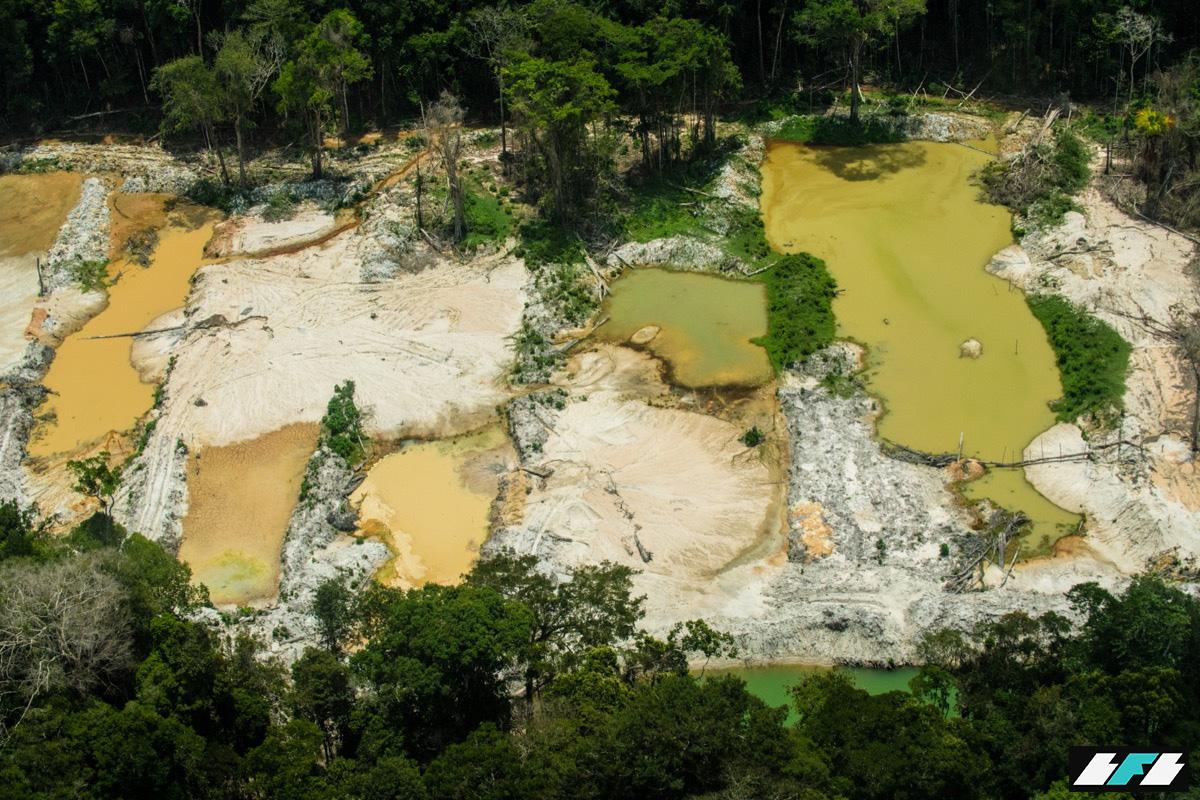
- As a result of these procedural flaws, environmental offenses often go unpunished. Thus, those who appropriate land, engage in illegal deforestation, or steal timber are rarely prosecuted.
Brazil’s Ministério Público Federal has demonstrated how an ambitious corps of prosecutors can foster compliance with environmental laws. After charges are filed and indictments served, however, the forum for law enforcement shifts to the courtroom, which in the jurisdictions of the Pan Amazon usually translates into inaction and impunity. Failure to enforce environmental law in the courts is part of a larger problem of political corruption and judicial dysfunction. Just as illegal loggers and land grabbers rarely see the inside of a jail, individuals guilty of bribery, embezzlement and money laundering also largely escape punishment. Success in fighting environmental crime depends on a society’s ability to isolate its judicial system from political corruption. Fighting corruption in the judicial system and enforcing environmental laws go hand in hand.
Corruption takes many forms, but in the overwhelming number of acts of political corruption that infect government, it is usually a crime of commission, where the guilty parties proactively offer or solicit bribes or kickbacks, or engage in money laundering. This type of malfeasance occurs within the judicial system, but there is a more insidious form of corruption that contaminates the criminal justice system. The failure to act when its officers are legally obligated to do so is a crime of omission; sometimes referred to as ‘wilful blindness’, it describes the behavior of prosecutors who abuse their ‘power of discretion’ to bring charges – or not. For judges, it might be their ability to delay a case until the statute of limitations terminates its deliberation, or to dismiss a case based on technical or jurisdictional considerations. Although public scrutiny is logically focused on crimes of commission, crimes of omission are often much more damaging to society. Both are illegal.
The public is not fooled by the absence of judicial action to penalize corruption or protect the environment. Public sentiments are informed by personal experience and the seemingly endless number of incidents and scandals reported by the press – week after week, month after month, year after year. A corruption scandal may cause the accused to lose their job and be indicted, but they are seldom detained for more than a few days, and as the scandal recedes from public memory, the case may be dismissed by either an act of omission (political influence) or an act of commission (bribery). Malfeasance in the environmental sphere likewise usually goes unpunished. Individuals guilty of land grabbing, illegal deforestation and timber theft are rarely prosecuted, and, if they are, they almost never pay fines, forfeit (misbegotten) assets or go to jail.
Most cases of judicial malfeasance remain unknown because the justice system is inherently non-transparent. Police and prosecutors work in secret to avoid alerting suspects; although this is appropriate in most felony investigations, it creates an ecosystem shielded from public scrutiny. Another impediment to transparency is the vocation shared by defense lawyers, prosecutors and judges, members of a professional clan unified by education, idiom and identity. As officers of the court, they are subject to an internal hierarchy that governs their actions and determines their careers. In an ethical society, professional hierarchies can reinforce good behavior, but in a cynical society, they create negative feedback loops and conceal acts of wrongdoing.
That depravity of the legal system extends far beyond political corruption and infects multiple aspects of civil life. Payment of a bribe to an official of the court is not always about avoiding arrest or prosecution or suborning a ruling, because money is also paid to obtain a fair hearing in a non-functional legal system.

Judicial corruption in Bolivia is particularly flagrant, but surveys across the region show that unreported crimes exceed fifty per cent. Victims do not report crimes for one obvious reason: they do not believe it will make a difference. No Amazonian country has a legal system that enjoys a positive perception greater than fifty per cent (positive + largely positive). Trust is lowest in Venezuela, where the system has been politicised by an abusive government, while the citizens of Brazil, Guyana and Suriname have the most respect – or the least disrespect.
Efforts to reform judicial systems are part of an ongoing effort by multilateral agencies and the United Nations to improve the ‘Rule of Law’ in all countries of the Pan Amazon. These programmes have enhanced the performance of the judicial sector by investing in technology and administrative systems; however, they have failed to punish the practitioners of political corruption – at least when measured by the number of judicial actions targeting elected officials that have actually come to trial. Litigation targeting elected officials exists, but it does not reflect the gargantuan levels of bribery, extortion and embezzlement that plague the region.
A serious effort to reform Brazil’s judicial system was initiated in 2004 via a constitutional amendment passed during the first administration of President Lula da Silva. The Reforma do Judiciário created two oversight bodies, one for the courts (Conselho Nacional de Justiça – CNJ) and one for prosecutorial agencies (Conselho Nacional do Ministério Público – CNMP). That effort has improved the judicial system by increasing efficiency, accountability and transparency, but the system still suffers from a backlog of cases, delays and lack of access for marginalized populations. Moreover, a culture of impunity continues to undermine confidence in the judiciary, particularly after hundreds of cases in the Lava Jato case were dismissed or overturned on technicalities amid accusations that the prosecution was driven by political partiality that constituted abuse of power.

In Peru, the Consejo Nacional de la Magistratura (CNM), an autonomous entity responsible for appointing and dismissing judges and prosecutors, was embroiled in a scandal in 2018 after recorded conversations (known as CNM Audios) revealed that board members participated in a criminal conspiracy involving bribery and influence peddling. Peru’s interim president (Martín Vizcarra) convened an extraordinary session of Congress that dissolved the CNM and replaced it with a new body called the Junta Nacional de Justicia (JNJ). Five years after the scandal, only one lower-level judge has been convicted of a crime, while the senior jurists at the CNM are free as the case proceeds through a seemingly interminable investigation by the Attorney General’s Office. Meanwhile, the JNJ has come under attack from members of Congress who wish to dismiss several of the board members and replace them with individuals affiliated with their own political parties.
Almost every government in Ecuador since 2000 has tried to reform the judiciary, including a major institutional restructuring in 2008 and a series of high-profile trials linked to the Lava Jato scandals in 2017. Starting in 2024, however, the rule of law has been suspended because of an outbreak of extreme gang-led violence and the election of a president (Daniel Noboa) who has suspended most civil rights.
Public confidence in Bolivia’s judicial system is the lowest in decades because of rampant corruption and its ‘capture’ by the central government, which routinely uses it to suppress the political opposition. A citizen-led effort to reform the judicial system via referendum was barred from the ballot in 2024, and the current magistrates are serving past their constitutional five-year term.