- Roughly 95% of California’s old-growth redwood forests have been logged at least once, leaving mostly young trees and making the overall ecosystem less diverse.
- Fern mats — spongy masses of leather-leaf ferns and decomposed plant matter that build up high in the canopy — are an important part of that system, providing critical habitat for plants and animals in California’s redwood forests.
- Now, a pilot project is trying to restore fern mats to the canopies of particularly robust redwood trees.
- Scientists are finding that manually planting fern mats is also an effective buffer in a warming climate: they mitigate forest temperatures for salmon, birds and a host of other animals.
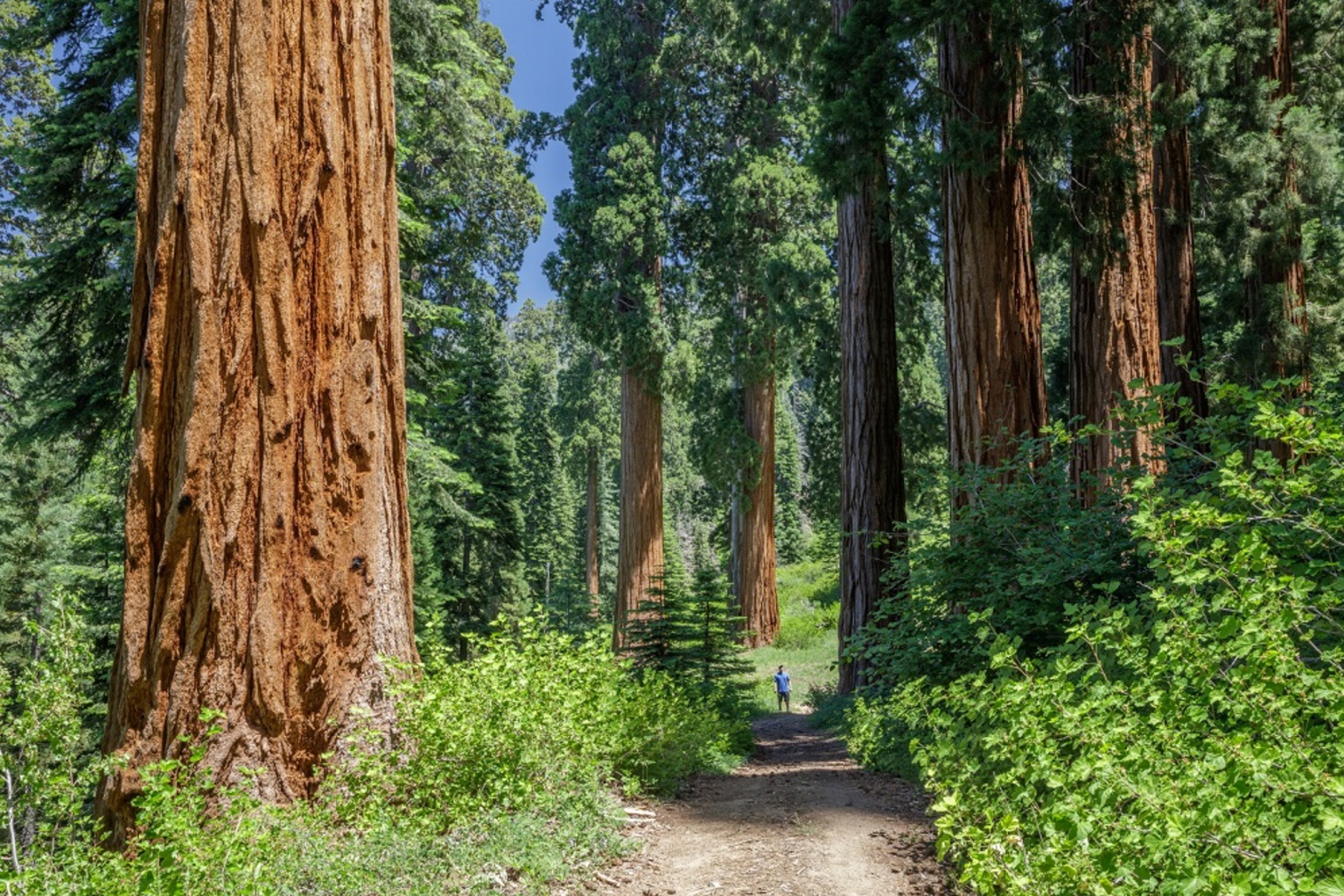
The Van Eck Forest in northwestern California is home to iconic coast redwood trees, which store more above-ground carbon per acre than any other forest type. The oldest trees can grow to heights of more than 90 meters (300 feet) and may be more than 2,000 years old. But due to the region’s extensive logging, which reduced old-growth redwood forests to just 5% of their original extent, very few large, old redwood trees (Sequoia sempervirens) exist today.
Consequently, there are also fewer fern mats high up in the forest canopy: large masses of leather-leaf ferns (Polypodium scouleri), a keystone species that stores water, mitigates forest temperatures and provides habitat for other plants and animals.

To help restore these historic forests, a conservation nonprofit and a university are experimenting with ways to transplant the mats back into redwood treetops. In a collaboration that began in 2021, the Pacific Forest Trust and scientists from California State Polytechnic University, Humboldt, are taking fern mats that have fallen from old-growth trees and replanting them in younger trees to restore the canopy layer.
As they grow over decades and centuries, these mats collect decomposing plant matter and germinate seeds, creating swaths of arboreal gardens that are home to salamanders, insects, birds and rare lichens.
“It’s like having a little garden up there,” said Laurie Wayburn, co-founder and president of the Pacific Forest Trust.

‘Putting back the pieces’
In nature, fern mats form when old-growth trees shed their oldest leaves from the highest branches, creating leaf litter on the tree limbs below. Over time, as leaves and other organic matter decompose, soil builds up and retains water, creating moist pockets where fern spores germinate.
Over many years, they grow into dense mats, some as large as cars, said Marie Antoine, a botanist and research associate in forestry at Cal Poly Humboldt who worked on the project. By then, other plants such as western hemlock and huckleberry shrubs grow up to a few feet tall to form these aerial gardens, providing berries and habitat for birds and other animals.
Pacific Forest Trust and Cal Poly Humboldt launched a pilot project to selectively plant fern mats in the tops of tall redwoods on the California side of Van Eck Forest, a 3,800-hectare (9,400-acre), privately owned timberland that straddles California and Oregon. It’s managed and conserved by the Pacific Forest Trust, under conservation easements, with a mandate to protect and restore the remaining old-growth forest while sustainably harvesting timber.
In the four years since the project began, researchers have learned more about which trees are best to prioritize, and how they might be able to scale up across a larger area.
“We have been managing this forest … to put back all the pieces that belong in an old-growth forest while recognizing that this is a managed and young forest,” Wayburn said. Managed forests allow logging for timber while prioritizing old-growth qualities, such as reestablishing mid-canopy and shrub layers, protecting other native trees and retaining dead trees that characterize natural forests, she said.
These fern mats do a lot of work for the overall ecosystem, making them an important component of restoration, Wayburn said. Not only do fern mats shade the forest floor, keeping temperatures cool and foster surrounding biodiversity, they’re also crucial to the forest’s hydrology.
Fern mats store huge amounts of water — roughly 5,000 gallons per acre, or nearly 47,000 liters per hectare — that are released in the hottest months, keeping the rest of the forest hydrated, which is crucial during drought. Redwoods’ aerial roots can also plug into those mats as a water source, Wayburn said.

“That’s a really critical function as our climate [becomes] warmer for longer,” she said. The climate is also increasingly drier, she added, resulting in roughly a third less fog since the early 1900s. That’s problematic because fog provides more than 30% of the precipitation in redwood forests.
Part of that strategy requires preserving, in perpetuity, what the Pacific Forest Trust deems “potentially elite trees,” or PETs for short — those that grow the fastest. Redwoods live for thousands of years, and these older specimens store more carbon, provide more habitat and hold larger fern mats. However, because of widespread logging, ancient trees are increasingly rare.
“We know the importance of these older trees, but there’s not really a provision for having trees like this in the future unless we do something different on the broader landscape,” Antoine said.
So, the science team selected the next-best trees available in Van Eck, many of which are younger than 150 years old, just babies by comparison, Antoine said, but they are robust trees with enough structure to hold the mats in their branches.
With permits to collect fern mats that blew down from the canopies during storms, the team tied bread-loaf-sized mats onto supportive branches using biodegradable hemp cord. Over the years, a few of them have blown back down, but those that haven’t budged are located in structurally mature trees, Antoine said. So far, she and her colleagues have planted 60 fern mats in 15 of the so-called elite trees. The team plans to check on the existing fern mats in the new year.

Mini-ecosystems in the treetops
In addition to hosting fern mats, large, old trees have other benefits too.
Their textured bark and notches of rotting wood provide habitat for plants, insects, bats and even methane-eating bacteria. The larger the tree, the greater the surface area for bacteria to live, and the more methane they consume. Methane’s warming potential is about 80 times greater than carbon dioxide over a 20-year timescale, which is why the bacteria are so important.
Old redwood trees also have extensive underground mycorrhizal networks — branching fungal threads that grow between root systems and share energy and signals between trees. The oldest ones are the wisest, Wayburn said: “One big old tree is kind of like the matriarchal elephant.”
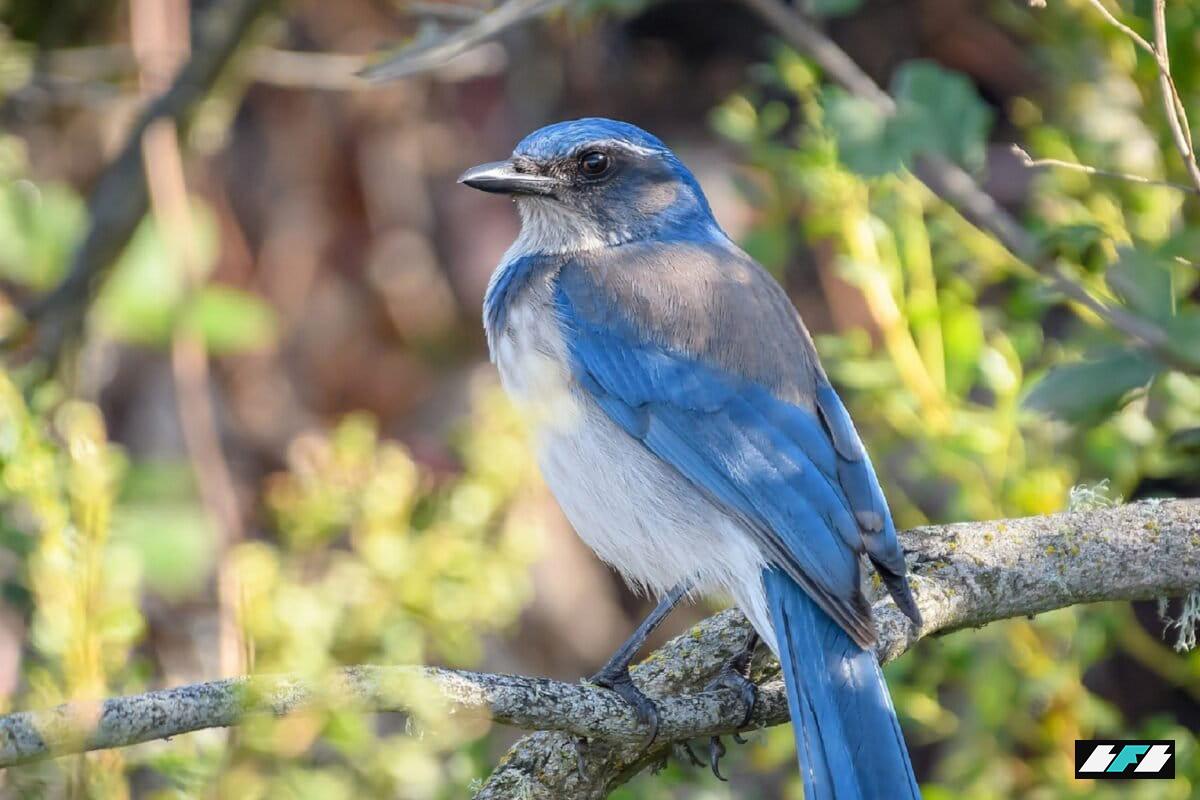
These skyward ecosystems support a slew of forest life, from spiders and crickets to oribatid mites and salamanders. Chickadees (genus Poecile), common ravens (Corvus corax), ruby-crowned kinglets (Corthylio calendula), Steller’s jays (Cyanocitta stelleri) and other bird species frequent the canopies, too, Antoine said.
“A lot of the biodiversity in our coast redwood forest is in the canopy,” said Ben Blom, director of stewardship and restoration at Save the Redwoods League, a nonprofit dedicated to restoring and protecting land for coast redwood and giant sequoia (Sequoiadendron giganteum) forests. “But in order to harbor that biodiversity, you need to have big trees with big branches.”

The endangered marbled murrelet (Brachyramphus marmoratus), for instance, is a seabird that nests in old-growth coast redwood trees, using large, mossy branches to lay its eggs. But there are fewer trees to nest in. “As we’ve lost these complex forests, their numbers have declined,” Blom said.
Importantly, dense tree canopies also provide the necessary shade to cool rivers and streams for spawning salmon, Blom added. When the trees fall over and die, they’re important for salmon, creating eddies and pools that provide habitat for different life stages. In turn, when the salmon die, they fertilize the soil and sediments with nitrogen — a crucial element for forest growth. Salmon numbers have likewise declined with old-growth forest logging.
Wandering salamanders (Aneides vagrans), meanwhile, have evolved to live their entire lives in the redwoods’ arboreal canopy.

Looking up at the future
Now that scientists know it’s possible to manually transplant fern mats, they’re hoping to scale up the project to older, larger trees that can hold them in place for long periods of time.
For instance, Save the Redwoods League is restoring large tracts of forest that have been leveled by loggers. “I could see [this fern mat] canopy work eventually being a component of the project as well,” Blom told Mongabay. Working with tribal leaders to develop healthy forest management in tandem with cultural practices is essential, he added, such as using controlled burns in areas where decades of fire suppression have turned fire into a destructive threat.
Another ideal location is Arcata Community Forest, Antoine said, a secondary forest with trees that are a few decades older than those in Van Eck. If managers can designate a few “elite” trees for protection there, “those would be the trees where we could plant ferns and let those be these islands of biodiversity, even in a managed forest landscape,” Antoine said. “It doesn’t have to be every tree in the forest.”
There’s a delicate balance between market pressures and fostering the redwood forests of the future, Wayburn said. But by prioritizing pockets where some trees can live out their thousand-year-old lives, restoring ecosystem function and biodiversity is possible.
“A forest is a system,” she added, “not just a commodity.”