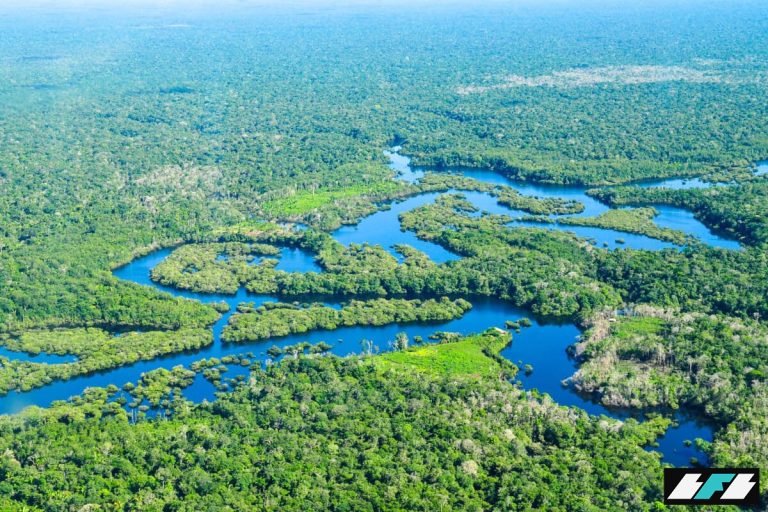
- In the southeastern Colombian department of Vaupés, members of the Indigenous Macaquiño community have maintained a healthy territory through rituals and prayers that govern the use of natural resources and their deep respect for the spirits that guard sacred sites.
- A series of cultural transformations that began with the arrival of rubber tappers, missionaries and other non-Indigenous outsiders since the 19th century has led to a decline in many spiritual and cultural traditions, undermining the area’s sacred sites and the communities’ relationship with their territory.
- More recent changes, such as government education policies and laws that hand more power to Indigenous peoples to manage their territories, have also impacted the generational transfer of spiritual and cultural knowledge.
- Members Mongabay spoke to said they welcome some of the changes that have come with these cultural transformations, such as the opportunity to obtain a formal education and return with knowledge that can complement their Indigenous knowledge.
VAUPÉS, COLOMBIA – As a baby, Elisa Fernández Sánchez’ mother would place her into the bow of the canoe and glide across the murky waters of the Vaupés River in the thick Amazon rainforest. Their journey towards the traditional forest gardens was not easy, but they did it almost every day. Her mom would plunge the canoe into a series of small river channels, ducking to protect herself from the violent blizzard of branches, vines and leaves that threatened to gouge her eyes if she was not careful.
Like most members of the mostly Cubeo Macaquiño community at the time, her mother respected nature and the spiritual beings that guard its sacred sites. It was dangerous to enter the forest unprotected. To enter sacred sites, the payé (an Indigenous authority responsible for maintaining the community’s cultural and spiritual well-being) had to pray to the spirits for permission. Failure to respect this rule could result in severe illness, they believed.
Through rituals, prayers and their careful relationship with nature, the Macaquiño community has maintained a healthy territory. It is one of four Indigenous communities that form part of the Association of Traditional Indigenous Authorities Surrounding Mitú (AATIAM), a public entity with a state-recognized right to govern autonomously.
Manuel Claudio Fernández, the captain of Macaquiño, said that the community does not care for the land; they co-exist with it. “How do we co-exist? By respecting the forest, the articulation of spirits, the water, the forest and us humans. We, the people, depend on water and the forest. And the forest and water also depend on us.”
But Claudio and other community members who spoke to Mongabay have been noticing a series of changes throughout the region over the last few decades. From the arrival of missionaries to the rubber tappers and non-Indigenous settlers, there has been a cultural and spiritual loss in the region that threatens to strain this relationship with nature.
“It’s deteriorating,” Claudio said. “We have been swept away by the globalized world, giving less importance to what is our own. We have lost control and appropriated other people’s things without a clear understanding of their purpose. That leads to territorial neglect.”
In mid-September, Mongabay visited Macaquiño on the banks of the Vaupés River to see how a community — like many others across the Amazon rainforest — is facing cultural transformation, and ultimately what this means for how people now relate to nature.



The devil’s work
It was early morning when we woke to the sound of women sweeping sand below our hammocks. They were preparing the maloca, a large communal house which is central to Indigenous community life, for a traditional ceremony that would begin a few hours later. While preparing a traditional crown made of parrot feathers a day earlier, Julian de Jesus Madrid Correa, a member of Macaquiño, told Mongabay that while the community still practices some Indigenous traditions, their lives have never been the same as prior to the arrival of the missionaries.
As he carefully pierced a woven headpiece with vibrant green, red and white feathers, he told Mongabay that the impact, which he sees as irreversible, has been devastating. The prohibitions imposed by the missionaries meant many traditions were expelled and elders were unable to transfer cultural knowledge to younger generations.
“It is very sad to tell the story of how we used to live,” he said.
Missionary activity in Vaupés expanded shortly after the rubber boom crashed in the 19th century. The aim was to establish churches and convert the region’s Indigenous groups. Under the Colombian Constitution of 1886, Catholic missionaries were granted significant administrative and judicial powers over Indigenous peoples in designated mission territories. The objective was to “civilize” and Christianize the Indigenous populations and, through their control of education, promote the Spanish language.
When questioned by Mongabay about the history of missionaries in the region, most elders in Macaquiño mentioned the name Sophie Muller. In 1944, the young North American woman arrived in Vaupés, where, for over 50 years, she evangelized the department’s Indigenous peoples, as well as others in Guainía and Vichada.
Stephen Hugh-Jones, an anthropologist who has spent decades working with Indigenous communities in the Colombian Amazon, carried out fieldwork while the missionaries were still active in Vaupés and surrounding regions. For him, among the most dramatic changes: the establishment of airstrips to support missionary activity.
The airstrips, which are still in use today, facilitated the massive influx of consumer goods and opened up these remote areas to other outsiders, such as those seeking profits from jaguar and other furs, gold and coca. It also improved access to healthcare and formal state education.
“The missionary airstrips provided the necessary infrastructure for a lot of the cocaine boom,” he explained to Mongabay over a video call from his house in Cambridge, U.K. “[Cocaine traders] were not interested in acculturating the [Indigenous], or in religion or education. They were simply interested in money. But their presence established yet more opening to the outside world and yet more access to consumer goods.”
From 1999 to 2004, the area under coca cultivation in the Vaupés region was over 1,000 hectares (2,471 acres), according to annual coca monitoring assessments published by the United Nations Office on Drugs and Crime (UNODC). The worst year on record was 2001, when the crops covered 1,918 hectares (4,739 acres) of land. Since then, partly due to the weakening territorial control by illegal armed groups, coca cultivation has decreased, down to less than 50 hectares (123 acres) between 2019 and 2023.
Research has shown that across the Colombian Amazon basin, coca production is not directly linked to deforestation. But in areas where armed actors operate, as has been the case in the Vaupés region over several decades, in part due to its extensive network of waterways that serve as trafficking arteries for groups that want to traffic drugs to Brazil, it may have an indirect influence.
Several members of the Macaquiño community recalled the missionaries’ efforts to establish boarding schools and force Indigenous peoples to abandon their malocas and to live in individual houses. In this, they were successful. Hardly any communities sleep in malocas anymore, and most kids from Macaquiño attend boarding schools in Mitú, a growing Amazonian municipality 40 minutes upriver from the community by boat.

Salvador Fernández Martínez, a former captain of Macaquiño, was ten years old when he was first aware of missionaries operating in the area. He said that the missionaries also tried to wipe out traditional arts, the carrizo (a traditional dance that revolves around a reed flute instrument) and the drinking of chicha, linked to a spiritual practice.
“[Muller] said the dances were of the devil, that [communities] shouldn’t drink chicha, they shouldn’t smoke or do anything else,” Fernández told Mongabay over the phone, several weeks after we left Macaquiño. “In short, she completely forbade everything and many went and followed that religion, and others Catholicism.”
Decades later, far from the reserve and in an apartment on a quiet residential street in Bogotá, the anthropologist Francisco Ortiz sat on an armchair, cradled by floor-to-ceiling bookshelves. He recalled the cultural transformations he observed first-hand while working as a co-founder of the NGO Etnollano Foundation in the Colombian Amazon over the last few decades.
“These moments in history remain alive,” he said, referring to the rules imposed by missionaries and the new forms of social organization that followed the arrival of non-Indigenous people. “On that basis, at each moment in history, other worldviews and economic systems are adopted.”
Many Indigenous people in Vaupés, including in Macaquiño, continue to practice Catholicism or Evangelism while maintaining some of their Indigenous traditional beliefs. But for many communities, traditional ceremonies are no longer what they used to be, Ortiz explained.
“It’s a performance, but it’s still a reminder of the tradition,” he said. “Through that exercise, they remember the myths and the profound reason for the ceremonies. They no longer practice them as they once did, but they remember them and revive them in a way.”

Forgetting how to dance with the sacred
Directly across the shore of the Macaquiño community is an island. It contains two lagoons which are sacred to the community and areas of flooded forest. After crossing the river, Harold Ferreira Romero, a fisher from the community, entered the smallest lagoon through a series of small river channels and plunged our canoe into thickets of extensive aerial root systems and dangling branches and vines.
Omar Salvador Fernández Chequemarca, another Macaquiño member who was seated at the bow of the boat, warned us to duck for cover to avoid fallen trees that could pierce our bodies. Once through the natural barricade, daylight turned to darkness as the blistering late-morning sun became concealed behind the dark green canopy above us.
Despite being Christian, community members still say this area, which is known as the Cana Lagoon, or Miaibi, is guarded by spirits. Elders warn that those who enter or eat fish from its waters develop grey hair, which is frowned upon by the Cubeo people.
“When we grew up, it was a sacred, respectable place,” said Pedro Rafael Fernández Tiana, the community’s last-remaining sabedor (wise person), while observing other community members prepare for the upcoming ceremony from his seat in the maloca. “People were afraid they would have grey hair,” he explained. “Now, the people here in Macaquiño are young and have grey hair. At 18, they already have grey hair. It’s because they eat fish that come from the Laguna Cana [Cana Lagoon].”
People are supposed to ask the spirits for permission to enter. But today, few do. Community members told Mongabay this is due to a combination of factors, such as a greater demand for fish to feed the community’s growing population. Community elders and anthropologists also point to another factor: a waning interest in Indigenous cultural traditions and spirituality among residents.


“The [elders] aren’t interested in teaching the young people anymore,” Ana Luz Uribe la Cuña, a resident of Macaquiño, told Mongabay. “The kids these days don’t know how to play the carrizo or dance. Besides, many of the young people aren’t interested anymore either.”
Ortiz said rules that dictate when or where community members fish, or who can enter sacred sites, set limits on the use of natural resources. In doing so, it prevents the exploitation of natural areas. If fewer people respect the rules, exploitation becomes more likely.
“Here in the community, we’ve lost that respect,” Jesus Madrid said. “[Community members] go fishing out of economic need, for sustenance. They don’t respect it and they exploit it. In the past, they didn’t do that.”
Jesus Madrid said that fish stocks have not yet been depleted, but based on what the elders say, there are fewer fish than before.

Off to boarding school
Four hours of traditional ceremony had passed. While members of the community continued to arrive with fresh buckets of chicha, the same few men and women danced in circles to the carrizo at the centre of the maloca. Across the room, a group of women, including Sánchez, cackled with laughter over the sound of the instruments.
Moments later, a group of 20 school children entered in pairs, led by a group of teachers who, besides one man, were not from the community. The well-mannered children did not seem older than eight years old. It wasn’t until they arrived that it became obvious how empty the space was of any young people. Most of them, we were told, were in boarding schools in Mitú.
Mitú has grown significantly since it was first developed as a center for rubber and fur trading in the 20th century. According to the latest census, the population has risen from 4,000 in 1975 to over 47,000 in 2015.
This rapid expansion, which locals told Mongabay was mainly caused by the migration of Indigenous people from nearby communities to the city, as well as the arrival of outsiders seeking to establish businesses, has placed significant pressure on urban infrastructure and local natural resources. It has also impacted Indigenous cultural identity, as people from different Indigenous clans live alongside each other and attend state schools where lessons are taught in Spanish.
“From a young age, children are being separated from their families and left in boarding schools,” said Carlos Castañeda Hernández, the regional director of the Corporation for Sustainable Development of the Northern and Eastern Amazon (CDA), during an interview with Mongabay in the garden of our accommodation in Mitú. “They don’t spend enough time with their families to hear about their experiences. That communication has been lost.”

Some members Mongabay spoke to said that despite some of the negative impacts, such as the loss of certain cultural traditions, they also see some benefits to cultural transformation, such as the opportunity for their children to obtain a formal education and return to the territory with information that can complement their Indigenous knowledge and improve their living conditions.
More recent policy changes have also had some unintended impacts on the transfer of spiritual and cultural knowledge and the community’s relationship with nature. Decree 632, which was approved in 2018, formally recognizes Indigenous governance in the country’s Guainía, Amazonas and Vaupés departments, but it has also caused a shift in captains’ responsibilities. Ortiz explained that the Indigenous authorities now have to spend more time reporting to the state, filling in funding applications and attending meetings, rather than on cultural and territorial protection and preservation.
“Often the person appointed as captain is a young man who has some knowledge of the outside world, who has more communication with the [Colombian] administration, but who doesn’t so much represent what the original captaincy meant, like the responsibility, according to ancestral law, of caring for a territory,” Ortiz said. “That notion of caring for the territory is less important now.”
Other recent policy changes, such as the establishment of the Indigenous Education System (SEIP) through Decree 0481 of 2025, a law that legally recognizes the right of Indigenous peoples to an education that considers their culture, identity and traditional knowledge, have also contributed to a decline in rituals, prayers and traditions that strengthen the community’s connection with the natural world.
While on paper this sounds positive, Claudio said the policy is “a trap”, as it still fails to integrate Indigenous knowledge systems and ensure educational policies genuinely respect Indigenous education.
“Young people, all of us, need to read and speak at least a basic level of Spanish to be able to connect with the globalized world,” he said. “But our own education has to be present in that process. Our own education isn’t about going to the classroom. No. It comes from our homes, from the families.”
Ortiz said the government has not provided concrete tools for the proper implementation of the SEIP. “Since formal schooling revolves around writing, it’s assumed that someone from outside can bring about this transformation or implement this model,” he said. “But no. Knowledge of nature, management techniques and the sciences themselves are present from within, from the [Indigenous] processes themselves.”
Ortiz said this involves learning how to listen to the forest, or learning the differences between crop varieties and how their sophisticated ecological calendar works.
“That’s the urgency: for people to understand that the key to caring for the land, to developing education, lies in their own traditions,” he said. “The foundation is their own knowledge, combined with new tools, with cartography, and with technical resources and expertise from other disciplines as well, because we need to bring a microscope to every community.”
Today, Elisa Fernández Sánchez, whose mother brought her in the bow of the canoe, is the female commander of Macaquiño. When Mongabay met her in the community’s maloca, she was sipping chicha, a traditional fermented drink made of cassava, or yucca, that is usually prepared for community gatherings.

Reminiscing about the past, Sánchez says she remembers the daily visits to the traditional forest gardens, or chagra, with her mother. Each day, they repeated the same journey by canoe and through immense jungle wetlands, balancing delicately on bridges made of fallen trees. At the chagra, she observed her mother at work and gradually learned about the hundreds of edible and medicinal plant species, such as cassava and plantain, that they depend on for self-subsistence, medicine and rituals.
On our way to the chagra that morning, repeating the same journey Fernández took with her mother each day as a child, she explained why it is so important to the community. Besides ensuring that the community has a diverse and self-sufficient source of food and medicine, the daily visits reinforce the women’s connection to the forest and allow for the transfer of important ancestral knowledge to their children. By strengthening this connection and ensuring their children know the forest, the territory remains protected.
“What my mother and grandmother taught me, I teach my daughters,” she said. “I’m passing on what my grandparents left me. I teach what they taught me.”
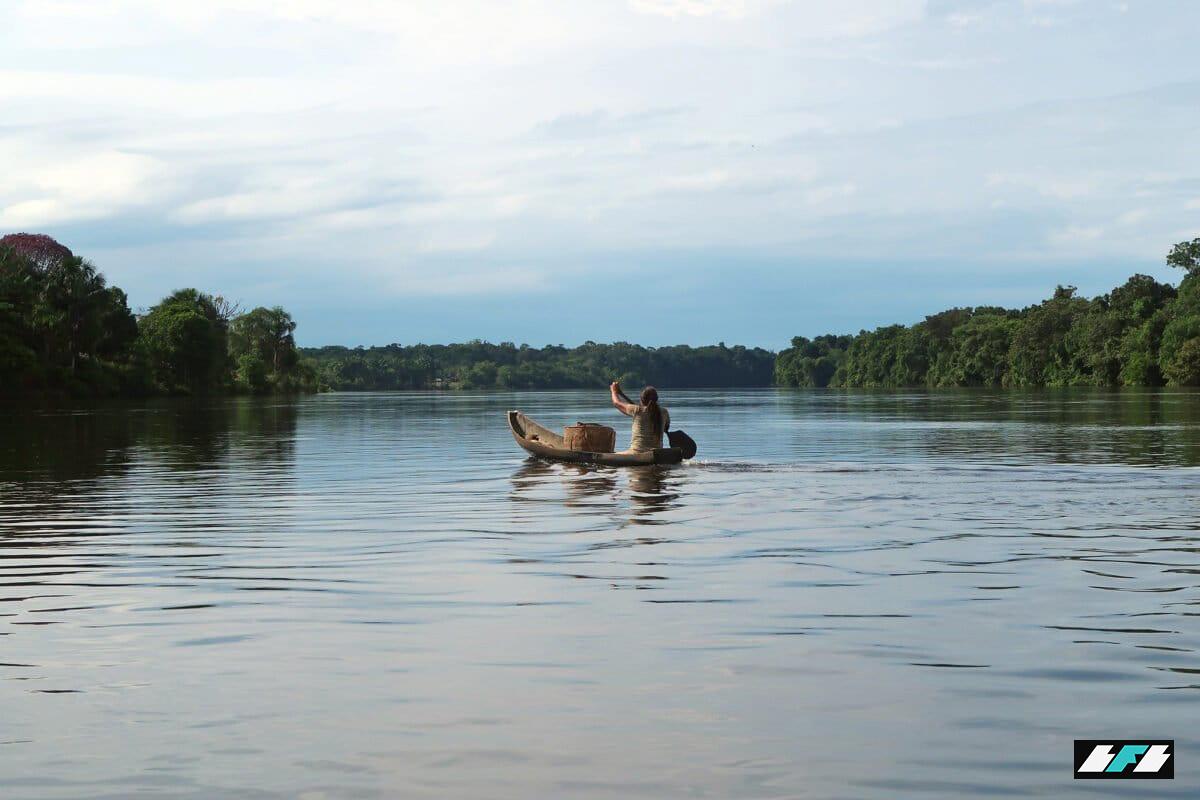
Banner image: A woman from the Indigenous Macaquiño community in Vaupés pushes her boat across the Vaupés River towards her traditional forest garden, or chagra. Image by Aimee Gabay/Mongabay.