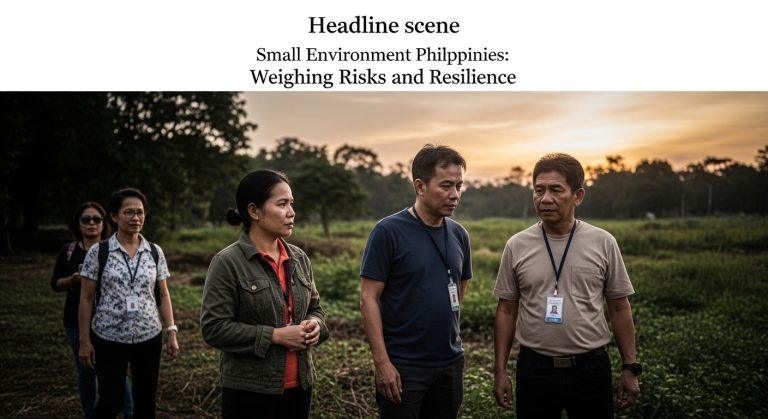
Indoor vertical farming in the Philippines demonstrates resilience and urban food production.
Updated: April 8, 2026
inside Environment Philippines, policymakers, scientists, and citizens are wrestling with how to keep air clean, water secure, and food accessible in densely built areas. This analysis looks beyond headlines to explain how urban planning, technology, and everyday choices intersect to shape resilience amid rising temperatures, erratic rainfall, and a growing demand for space.
Urbanizing with green infrastructure: risks and opportunities
City centers across Philippine metro areas confront heat buildup, frequent downpours, and crowded streets that hinder mobility and health. Green infrastructure—trees and canopy cover, permeable pavements, rain gardens, and green roofs—offers measurable benefits: cooler microclimates, better stormwater handling, and improved air quality. Yet financing, maintenance, and equity matter. When shade and water features are treated as add-ons rather than core design principles, benefits wane and maintenance costs rise for local governments and households alike.
A notable development is the use of controlled-environment farming inside urban spaces. The Philippines’ first indoor vertical strawberry operation signals how vertical design can bring fresh produce closer to dense populations, potentially shortening supply chains and creating local jobs. This model also illustrates a critical caveat: such ventures demand reliable power, steady water supply, and market certainty. In practice, green infrastructure and indoor farming should complement each other—providing cooling and flood control while diversifying food supply—rather than competing for limited resources or misaligned incentives.
Policy and local action: bridging gaps
National climate plans provide direction, but the decisive work happens in cities and towns. Local governments determine land use, building codes, and permitting for green features and urban farms. Inconsistent rules, lengthy approvals, or fragmented utility incentives can stall promising pilots. A practical path forward is to align urban resilience with existing development plans: embed shade trees and rain gardens in transport projects, create streamlined permits for small-scale urban farms, and offer tax or grid-support incentives for facilities that combine farming with energy resilience (for example, solar-powered greenhouses or rainwater harvesting). When LGUs coordinate with utilities and civil society, resilience becomes a shared program rather than a series of isolated projects.
Beyond coding and permits, community engagement matters. Residents gain ownership when urban farming projects connect to local markets, schools, or health initiatives. Such linkage not only secures buy-in but also distributes value—reducing food miles, creating jobs, and reinforcing neighborhood social capital. The result is a more durable approach to climate adaptation that reflects local priorities and capacities.
Economic realities and resilience: costs and benefits
Stone-and-mortar green upgrades and indoor farming equipment carry upfront costs. The fiscal math depends on electricity prices, crop choices, maintenance, and access to markets. In places where power reliability is a challenge or energy costs are high, running energy-intensive farms can strain budgets and push prices upward for consumers. That said, integrating energy efficiency, solar generation, and water reuse can tilt the balance toward viability. For example, pairing indoor farms with rooftop solar or community micro-grids reduces grid dependence and can stabilize operating costs over time. When designed with equity in mind, resilience investments also support low-income communities by increasing access to fresh produce and creating local employment opportunities.
Resilience is not a single technology but a portfolio of options. Climate risks are dynamic: heat waves, floods, and supply shocks will vary by district. A diversified mix—green corridors for heat and flood management, rooftop farms for local nutrition, and community gardens for education—offers a more robust buffer against volatility. The challenge is ensuring those options are affordable, scalable, and governed by transparent metrics that track social and environmental returns.
Actionable Takeaways
- Citizens: support and participate in local urban farming initiatives; cultivate balcony or community garden plots; practice water conservation and composting to close nutrient loops.
- Local governments: weave green infrastructure and urban farming into city plans; simplify permitting for compliant green builds and micro-farms; pilot public-private energy and water reuse projects.
- Businesses and developers: invest in energy-efficient equipment and low-water farming systems; partner with LGUs to create neighborhood food hubs and training programs; adopt circular-resource practices.
- National policy makers: provide funding for resilient infrastructure and scalable urban farming pilots; share best practices across regions; streamline regulations to accelerate adoption while protecting labor and environmental standards.