Involuntary parks: Human conflict is creating unintended refuges for wildlife
Updated: April 8, 2026
- Involuntary parks — areas made largely untenable for human habitation due to environmental contamination, war, border disputes or other forms of conflict and violence — have often unintentionally benefited nature, with flora and fauna sometimes thriving in the absence of people.
- In some cases, these unanticipated refugia have been formalized as wildlife preserves. Hanford Reach National Monument in the U.S. state of Washington is one example. Though the land of this conserved area surrounds a Cold War site contaminated by chemical and radioactive waste, hundreds of species thrive there.
- The southern Kuril Islands — territory disputed by Russia and Japan — offer another example. Russia has set up preserves within the long-contested area, while Japan has declared a national park just outside it. But attempts at creating a permanent border peace park or resolving tensions have failed, and future conservation is uncertain.
- With the world now rocked by geopolitical conflict and by worsening environmental disasters (due to pollution, climate change and land-use change), nations need to assess how places that become unhealthy to humanity — turning them into involuntary parks — can be healed, and what role conservation can play in recovery.
Few locations on Earth are as haunting or deeply ironic as so-called involuntary parks — places too toxic, dangerous, or otherwise made off-limits for human habitation, but which have paradoxically and unintentionally become sanctuaries for wildlife in our absence.
As the name coined by science fiction author Bruce Sterling suggests, involuntary parks weren’t established for conservation — and in many cases aren’t formally recognized as preserves.
Some encompass former nuclear, military or manufacturing complexes and/or their buffer zones. Some are sites of major environmental disasters, former battlefields laced with unexploded munitions, or slices of no-man’s land demarcating tense borders between geopolitical rivals.


Despite their often destructive origins, a growing number of these involuntary parks have, over time, been officially designated as protected wildlife refuges or cross-border peace parks, actively managed by government organizations and advocated for by citizens and researchers — not so “involuntary” anymore.
It’s an attractive narrative. But without sufficient context, the genesis of an involuntary park (a process also controversially dubbed passive rewilding) can “imply that nature simply fixes itself, or that in the absence of human intervention, a favorable recovery inevitably occurs at sites that may still be seriously degraded or hazardous,” cautions David Havlick, a professor at the University of Colorado Colorado Springs in the U.S. Thus, the violent (and still potentially hazardous) human past may be “greenwashed from view,” he says.

Involuntary parks dot the world
Perhaps the single best-known involuntary park is the Chornobyl exclusion zone, where large mammals like wolves (Canis lupus) have come to roam following the 1986 nuclear power plant accident. However, the Russian war in Ukraine, which has now touched Chornobyl, points to how “involuntary parks” can be re-impacted by human conflict in new, unsettling ways.
Lesser-known involuntary parks include Zone Rouge, a literal 17,000-hectare (42,000-acre) no-man’s land that was the site of the First World War’s Battle of Verdun, off-limits due to millions of unexploded shells; and Rocky Mountain Arsenal, a once vital weapons plant in the U.S. state of Colorado, declared a toxic Super Fund Site, then morphed into Rocky Mountain Arsenal National Wildlife Refuge.
Such places aren’t merely relicts from a conflicted past. The world is currently experiencing a huge surge in human violence — with 61 conflicts across 31 nations in 2024 — along with unprecedented environmental disasters. As humanity bombs cities to rubble (think Ukraine and Gaza), and makes places increasingly uninhabitable due to global warming and land-use change (think the Aral Sea region of today, or low-lying areas on the U.S. East Coast and elsewhere circa 2050-2100), humanity needs to consciously consider how these ravaged places can be healed, and what role conservation may play in that recovery.
Hanford Reach National Monument in the U.S. and Kurilsky Nature Reserve in Russia (part of whose territory is contested by Japan) offer two examples of involuntary parks born of conflict and/or contamination, and transformed into managed wildlife conservation areas. But while both offer refuges for plants and animals, their future status remains perilous as they serve the evolving agendas of the powers that made them involuntary parks in the first place.

Salmon and plutonium: Hanford Reach National Monument
Hanford Reach National Monument covers roughly 79,000 hectares (195,000 acres) of arid shrub-steppe in the eastern part of the U.S state of Washington, and includes the last free-flowing stretch of the Columbia River, called the Hanford Reach. The monument was originally a buffer zone for the Hanford Site, a nuclear weapons manufacturing complex said to be one of the most toxic places in the country.
Hanford was established as a plutonium processing plant in 1943 as part of the Manhattan Project to develop the atomic bomb during World War II. Its plutonium was used in the world’s first nuclear detonation, at the Trinity Site in the state of New Mexico, as well as in the bomb dropped on the Japanese city of Nagasaki in August 1945. Hanford continued to produce plutonium for bombs until its last nuclear reactor was shut down in 1987.
Nearly three decades of production left behind vast amounts of hazardous chemical waste and radioactive materials; during its operation, airborne radioactive particles sickened an estimated 3,500 people living in nearby communities. Cleanup began in 1989 and is ongoing today.

In 2000, the site’s buffer zone was redesignated as Hanford Reach National Monument and its management transferred from the Department of Energy to the U.S. Fish & Wildlife Service. Roughly a third of the site, 27,000 hectares (66,700 acres), is open to the public for recreational day-use activities.
Is Hanford Reach an involuntary park? Opinions differ. Dana Ward, president of local bird-watching organization the Lower Columbia Basin Audubon Society, questions whether it could be called “involuntary,” given that the monument “was designated by popular demand by the region’s citizens.” His branch of the Audubon Society, a U.S. environmental NGO, was a leader in these efforts.
On the other hand, Simone Anter, staff attorney for the nonprofit Columbia Riverkeeper, says “involuntary park” could be an applicable designation. “The unique environment we see around Hanford was accidentally protected by the U.S. government as an indirect result of creating a security buffer around the Manhattan Project’s Hanford Site,” she explains. “This limited public access and development and left the environment wild and largely undisturbed for 80 years.”

So wild (and secure), in fact, that plants and animals, some thought to be nearly extinct or exceedingly rare, flourished there. The reach today is home to 43 species of fish, including threatened salmon and trout, and 42 mammal, 258 bird, four amphibian, 11 reptile and more than 1,500 invertebrate species. It is also “noted for its high resilience to climate change due to diversity of microclimates, topographical range, and habitat connectivity.”
More than 90% of Washington state’s shrub-steppe ecosystems have been lost to farming, grazing, mining and development, making the area around Hanford vitally important, Anter says. Animals such as burrowing owls (Athene cunicularia) are completely dependent on this remnant sagebrush ecosystem. The Columbia River ecosystem at Hanford is no less important, as it hosts a major Chinook salmon (Oncorhynchus tshawytscha) spawning site.

Although cleanup efforts continue at Hanford, there is still much chemical and radioactive pollution in the ground, fed by ongoing leaks from underground storage tanks and posing a threat to wildlife. Anter notes that one chemical, hexavalent chromium, “is very toxic to juvenile salmon.”
Besides contaminated groundwater percolating through soils toward the Columbia River, carcinogenic pollution finds other ways of moving through Hanford’s ecosystem, and sometimes beyond its borders. In the late 1990s, radioactive fruit flies made it as far as the local city dump via routine garbage collection. Tumbleweeds likewise drink up radiation from contaminated groundwater before rolling off with the wind. In flora, fauna or earth, workers have repeatedly found radiation where they did not expect it.
The pollution’s invisible presence is particularly concerning to local Indigenous communities, who long used the Hanford area to source food and medicine. Their access, while not completely severed, has been “severely infringed upon and restricted,” says Anter.

And their utilization of Hanford’s natural resources continues to pose risks. Members of the Yakama Nation, for example, have raised concerns about whether cancers, thyroid problems, birth defects and other illnesses in their community are linked to radiation.
Hanford Reach National Monument represents part of a wider weapons-to-wildlife shift occurring across the U.S., where nearly two dozen military sites have been reclassified as wildlife refuges since the late 1980s.
“Former proving grounds, chemical weapons facilities, nuclear production facilities, or ammunition storage sites are often too costly to clean to a standard for human occupancy or commercial use,” Havlick says. “Relegating them to conservation purposes can serve a way to repurpose these sites that allows the military to avoid remediation or maintenance costs while also claiming a ‘win’ for wildlife or conservation.”
Sea otters and submarines: Nature reserves on the southern Kuril Islands
Less than a month after Hanford plutonium was dropped on Nagasaki in August 1945, the nation of Japan found itself no longer master of the islands that had previously marked the northeastern edge of its empire. Known as the Kurils, the archipelago is particularly rich in marine resources.
Even after Japan announced its surrender to the Allies on Aug. 15, the Soviets invaded and annexed the Kurils, a volcanic island chain that stretches from the northeastern tip of Japan’s Hokkaido Island to Russia’s Kamchatka Peninsula. (The Kurils had been officially held by the Japanese since 1855, but were secretly promised to Russia by the Allies as part of the Yalta Agreement of February 1945.) All 17,000-plus Japanese residents were forced to leave the islands and repatriate to the newly drawn border.
Today the sparsely populated Kurils exist as contested border zone, with Russia claiming all the islands and requiring any visitors to apply for a special permit to visit them. Japan continues to claim the four islands closest to Hokkaido, calling them its “Northern Territories”: Kunashir (known in Japanese as Kunashiri), Iturup (Etorofu) and Shikotan islands, and the Lesser Kuril Ridge (Habomai) island group.
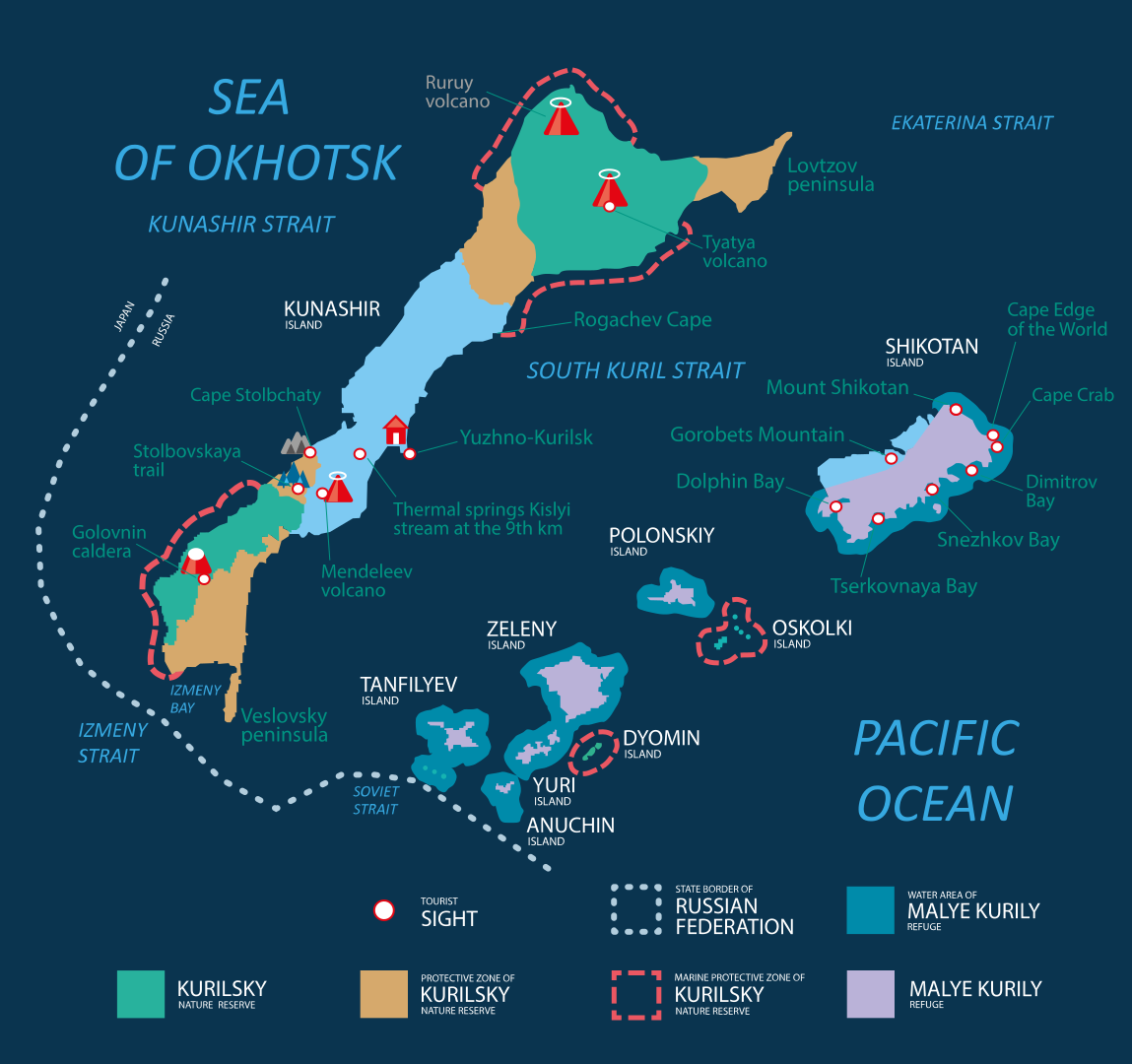
Japan insists these islands aren’t part of the Kurils, and points to nature to back its claims. Government materials state that “the distribution of flora and fauna in the Northern Territories is exactly the same as that of the main island of Hokkaido,” and that there is a “naturally formed” border between the four islands and the rest of the Kuril chain.
Japan also has a strong economic interest in the Kurils’ natural resources. “There is enthusiasm for getting access to these waters, which are particularly rich fishing grounds,” says James D.J. Brown, a professor at Temple University’s Japan campus, who specializes in Japan-Russia relations.
Key marine species include pollock, cod, salmon, squid and others, in addition to seaweed and kelp found there. Although Russia and Japan previously had agreements to allow Japanese fishers access to the southern Kurils, the majority were suspended as relations between the two countries soured after the 2022 Russian invasion of Ukraine.
Interest in tapping natural resources is perhaps tempered by an interest in conservation, on both sides of these contested waters. In 1983 and 1984, the Soviet Union established Malye Kurily State Refuge (67,900 hectares, or 167,800 acres) and Kurilsky Nature Reserve (65,900 hectares, or 162,800 acres) on the islands nearest Japan. The conservation areas aim “to preserve the unique nature of the islands that is important for both science and economy and for restoration of various plant and animal species.”

The reserve’s management declined to answer questions regarding its wildlife and conservation initiatives, instead directing Mongabay to its website. However, it did note that “the location of the reserve in the border zone has a positive impact on the conservation of natural complexes.” The Border Guard Service helps protect the Kurilsky Nature Reserve, its buffer zones and the Malye Kurily refuge through activities such as antipoaching raids for spawning rivers and marine areas, as well as fighting forest fires, the representative explained.
Important or rare species that benefit from the reserve — and the exclusion of most humans — include the threatened Blakiston’s fish-owl (Bubo blakistoni), salmon, brown bears (Ursus arctos), spotted seals (Phoca largha), and migratory birds, including threatened red-crowned cranes (Grus japonensis), among others.
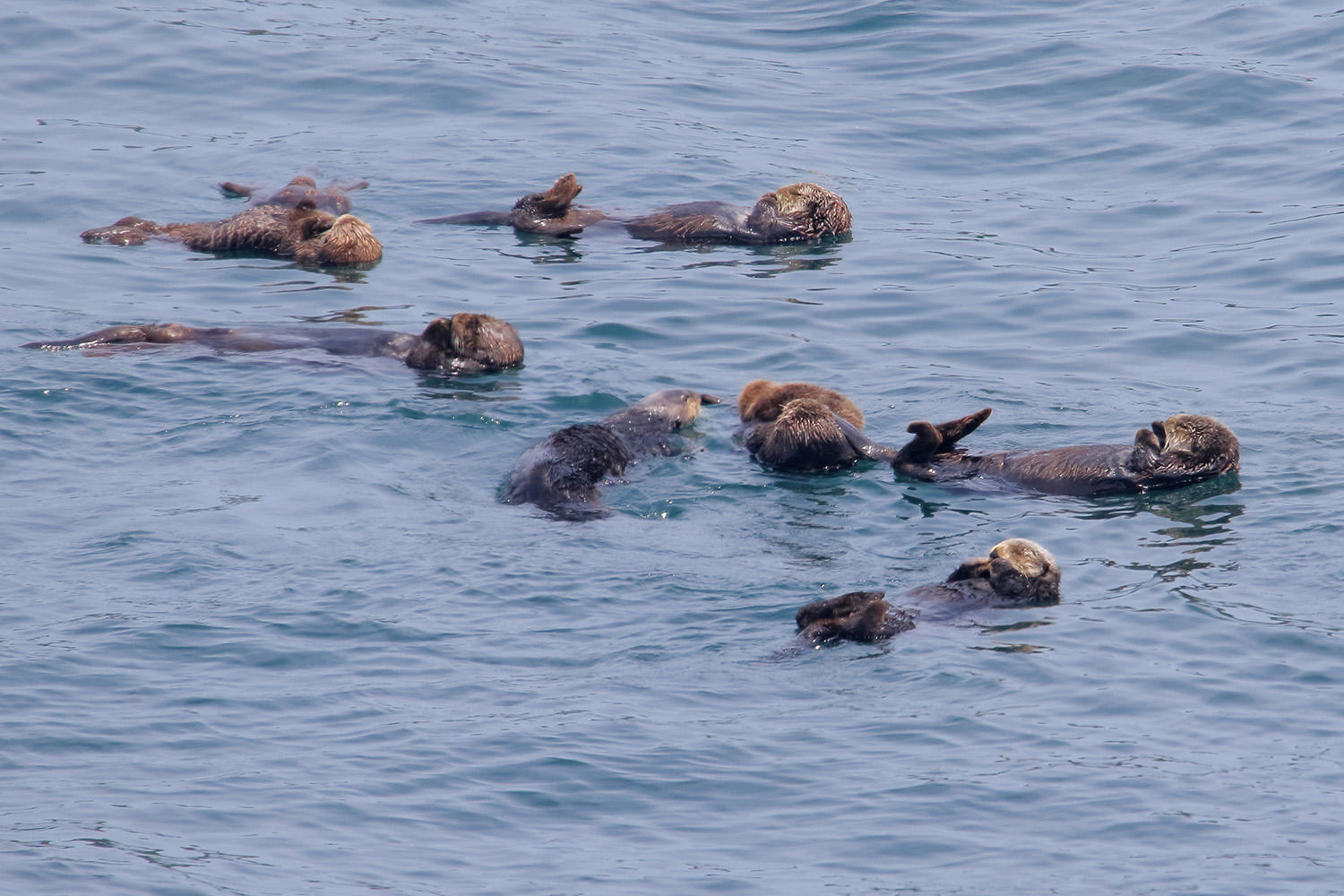
The reserve is also home to sea otters (Enhydra lutris), once hunted to near extinction for their pelts. Recently, sea otters believed to originate from the southern Kurils appear to have expanded their range into Japan.
A mere 20 kilometers (12 miles) from the Kurilsky reserve lies Japan’s Shiretoko Peninsula, a national park since 1964. In 2005, Shiretoko was inscribed as a natural World Heritage Site, a move that helps link Japan with the ecology of the “Northern Territories” (the southern Kurils), at least in the eyes of the international community.
At the time of its inscription, the IUCN, the global nature conservation authority, suggested obliquely that Shiretoko and conservation sites on “neighboring islands” (meaning Russia) collaborate toward future development as a cross-border World Heritage peace park.
“Given the fact that there is no prospect of resolving the [territorial] dispute, that is really just an ideal,” Brown says. “I think there was very little enthusiasm on the Russian side, principally due to the islands’ strategic importance.” The Kuril Islands mark the eastern edge of the Sea of Okhotsk, a key operations area for Russian nuclear submarines. “They wouldn’t want to remove their military assets from the southern islands or allow free access, because they see it as a militarily sensitive area,” Brown explains.

How the geopolitical standoff between Japan and Russia regarding the Kurils will eventually be resolved is anyone’s guess. And it remains to be seen whether better collaboration between the neighboring countries would strengthen conservation in the region or smooth the way for development and resource extraction.
“Trans-boundary sites pose additional challenges of governing across jurisdictions that may have very different funding capacities, environmental regulations, or interests in commemorating or obliterating histories of prior land uses,” Havlick notes.
Even without status change, development may yet come to the Kurils. In recent years, the Russian government has pushed for domestic tourism to the southern Kurils, which has been accompanied by infrastructure development, says Brown.
“There’s a bit of friction between the military wanting to keep parts of the area closed and between environmentalists wanting to maintain a pristine environment,” he says. “So if, to an extent, this has been an involuntary park in the past, I think maybe that is changing.”

The evolving nature of involuntary parks
As in Hanford, the Kurils and elsewhere, the locales, ecosystems and meanings ascribed to involuntary parks continue to change. For some, like U.S. Civil War battlefields, environmental protections grow more robust as citizen groups place greater value on conservation and mend geopolitical ties. In other cases, such as with Chornobyl, unintentional refuges for wildlife again get caught up in the never-ending cycle of human strife.
Some refugia hang in a delicate balance, their future in limbo and uncertain. In the demilitarized zone between North and South Korea, for example, nature thrives where development and habitation have become impossible. Ironically, conservationists worry that an end to tensions between the two Koreas could spell real danger for wildlife.
Experts say that involuntary parks can present an opportunity for both environmental and social recovery — if the whitewashing of history is avoided. Designating a controversial site as a wildlife refuge can, on the one hand, be used as “a chance to restore the site ecologically as well as an opportunity to recast its [incriminating] reputation,” Havlick notes in a 2011 paper. In such cases, the natural value of involuntary parks can be spotlighted, while glossing over histories of violence, forced removal and degradation.
On the other hand, Havlick points to the example of the European Green Belt — conservation areas that dot hundreds of miles of the former Iron Curtain — as sites that often strike a balance between greening and historical remembrance. He quotes a member of the European Parliament who worked extensively for the initiative: “We can’t only look to nature, that would be crazy. Culture, politics, nature, and history all need to be considered together.”
In a 2014 paper, Havlick expresses hope that conservation areas with complex land-use histories can be restored and managed to illuminate both their social and ecological past.
“This,” he writes, “may provide opportunities to reflect on the complexity of ongoing human relationships with the natural world.”
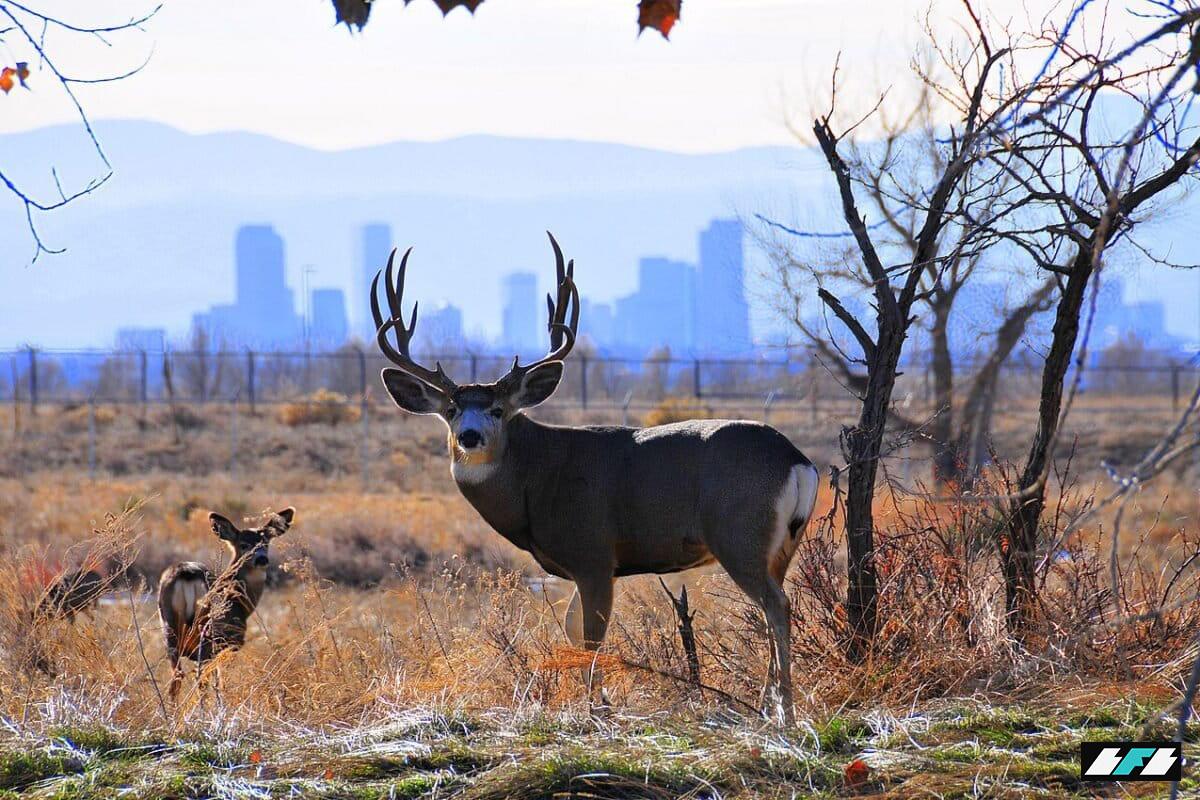
Banner image: A mule deer buck at Rocky Mountain Arsenal National Wildlife Refuge outside Denver, Colorado. Image by Oborseth via Wikimedia Commons (CC BY-SA 3.0).