10 Ways to Reduce Your Carbon Footprint and Fight Climate Change
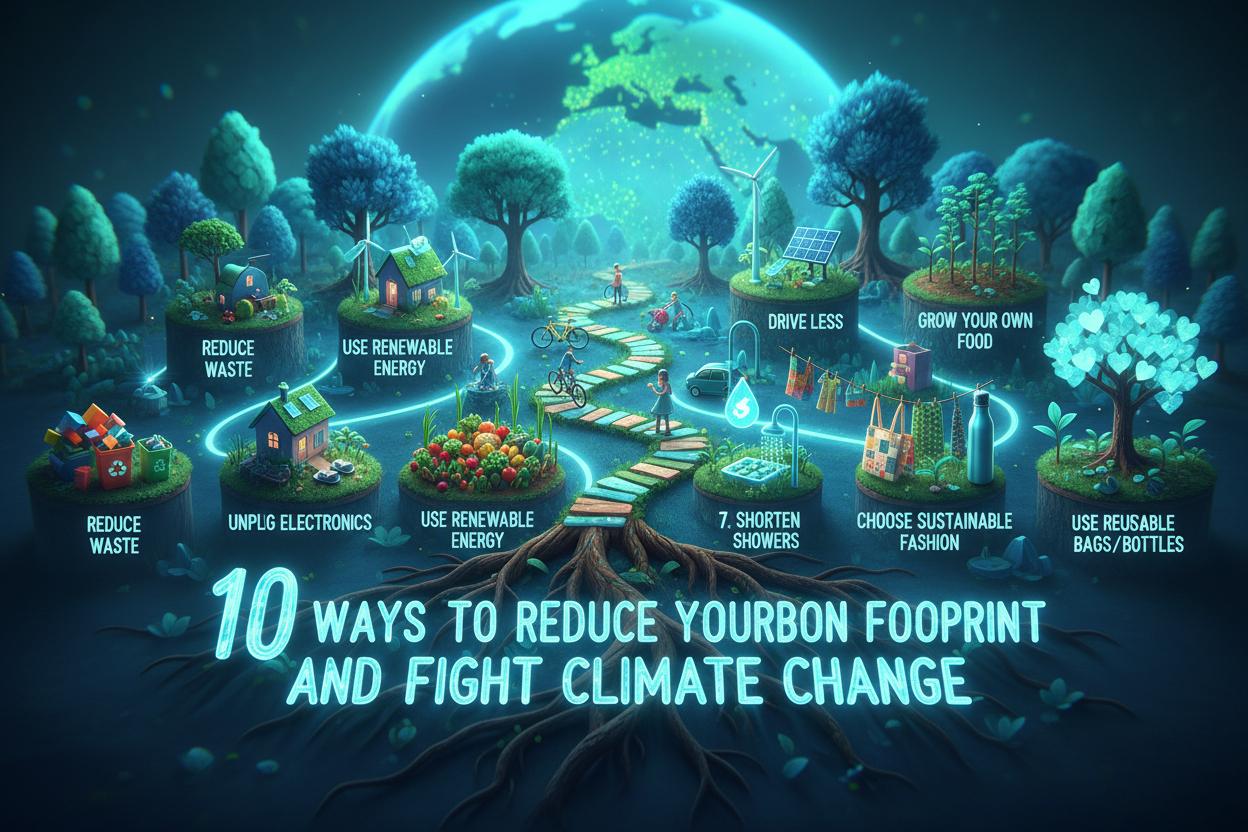
As concerns about climate change grow, individuals worldwide are seeking ways to reduce their carbon footprint. Lowering the amount of carbon dioxide and other carbon compounds we emit can significantly impact the environment. This comprehensive guide explores ten actionable strategies to help you live a more sustainable life and contribute to a healthier planet.
1. Adopt a Plant-Based Diet
One of the most effective ways to reduce your carbon footprint is by adopting a plant-based diet. The production of meat and dairy is resource-intensive and results in significant greenhouse gas emissions. By consuming more fruits, vegetables, legumes, and grains, you can lower your environmental impact. Not only is this diet better for the planet, but it also offers numerous health benefits.
Transitioning to a plant-based diet doesn’t mean you have to give up animal products entirely. Start by participating in initiatives like Meatless Monday to gradually reduce your meat consumption. Try experimenting with plant-based recipes and discover new flavors and textures that can make this lifestyle change enjoyable.
2. Reduce, Reuse, Recycle
The three R’s—reduce, reuse, and recycle—are fundamental concepts in minimizing waste and conserving natural resources. Reducing your consumption of single-use products, reusing items whenever possible, and recycling materials can significantly decrease the amount of waste sent to landfills.
Become familiar with your local recycling guidelines and ensure you are sorting your waste correctly. Consider donating items you no longer use instead of discarding them. Small changes in your daily habits can lead to a substantial reduction in your environmental impact over time.
3. Use Energy-Efficient Appliances

Investing in energy-efficient appliances is a straightforward way to reduce your household’s carbon emissions. Look for appliances with the ENERGY STAR® label, which indicates they meet energy efficiency guidelines set by the U.S. Environmental Protection Agency.
Switching to LED lighting, using smart thermostats, and unplugging devices when they are not in use can also help reduce your energy consumption. These changes not only help the environment but can also lower your energy bills.
4. Drive Less and Use Public Transport
Transportation is a significant source of carbon emissions. Reducing your reliance on fossil fuel-powered vehicles can drastically cut your carbon footprint. Consider walking, biking, carpooling, or using public transportation for your daily commute.
If you must drive, consider investing in a fuel-efficient or electric vehicle. Many urban areas are becoming more bike-friendly, and public transportation networks are expanding, making it easier than ever to travel more sustainably.
5. Support Renewable Energy
Transitioning to renewable energy sources like solar, wind, and hydropower is crucial in the fight against climate change. If possible, switch to a green energy provider or install solar panels on your property. Supporting renewable energy initiatives helps reduce dependence on fossil fuels and promotes cleaner air.
Stay informed about renewable energy developments and advocate for policies that encourage the transition from fossil fuels to sustainable energy sources. Your support can help accelerate the shift towards a greener future.
6. Conserve Water
Water conservation is another important aspect of reducing your carbon footprint. The energy required to pump, heat, and treat water is significant, and conserving water can help reduce this energy use.
Simple actions like fixing leaks, taking shorter showers, and using water-efficient fixtures can make a big difference. Collecting rainwater for gardening and landscaping is another effective way to conserve water and reduce your environmental impact.
7. Choose Sustainable Products

Supporting brands and companies that prioritize sustainability is a powerful way to drive change. When shopping, look for products made from recycled materials or those that are biodegradable. Choose brands with transparent supply chains and ethical labor practices.
By making informed purchasing decisions, you can encourage companies to adopt more sustainable practices and reduce their carbon emissions. Your choices as a consumer have the power to influence the market and promote sustainable innovation.
8. Plant Trees and Support Reforestation
Trees are vital for absorbing carbon dioxide and producing oxygen. Planting trees in your community or supporting reforestation projects can help combat climate change and promote biodiversity.
Organizations dedicated to reforestation, such as the One Tree Planted initiative, offer opportunities to contribute to tree-planting efforts worldwide. These projects not only help restore ecosystems but also support local communities and wildlife.
9. Educate Yourself and Others
Education is a powerful tool in the fight against climate change. Stay informed about environmental issues and share your knowledge with others. Encourage friends and family to adopt sustainable practices and discuss the importance of reducing carbon emissions.
Participate in community events and initiatives that promote environmental awareness. Together, individuals can create a strong voice advocating for policies and actions that address climate change effectively.
10. Advocate for Policy Change
While individual actions are essential, systemic change is necessary to address climate change on a larger scale. Advocate for policies that support renewable energy, carbon reduction, and environmental protection.
Contact your local representatives and express your support for climate-friendly legislation. Participate in campaigns and movements that push for governmental and corporate responsibility in reducing carbon emissions.

Takeaways
Reducing your carbon footprint is a vital step in combating climate change and preserving our planet for future generations. By adopting these ten strategies, you can contribute to a more sustainable world. Remember, every action counts, and together, we can make a difference.
Engage with your community, support sustainable initiatives, and continue learning about ways to reduce your environmental impact. Climate change is a global challenge, and collective efforts are key to ensuring a healthier, more sustainable future.
As you implement these changes, it’s essential to recognize the interconnectedness of environmental issues. The choices you make in one area, such as reducing energy consumption, can have a positive ripple effect on others, like decreasing air pollution and conserving natural resources. By understanding this interconnectedness, you can make more informed decisions that amplify your positive impact on the environment.
Another critical aspect of reducing your carbon footprint is maintaining a mindset of continual improvement. As new technologies and methods for sustainable living emerge, stay open to adopting these innovations. From advances in energy efficiency to breakthroughs in sustainable agriculture, there’s always room to enhance your efforts in fighting climate change.
Additionally, fostering global cooperation is vital. Climate change knows no borders, and international collaboration is crucial in mitigating its effects. Support global agreements and initiatives aimed at reducing carbon emissions and promoting sustainability. By uniting with others around the world, we can tackle climate change more effectively.
It’s also important to engage with and support organizations dedicated to climate action. Whether through volunteering, donations, or advocacy, your involvement can strengthen the collective efforts to address environmental challenges. Consider joining local environmental groups or participating in global campaigns that focus on sustainability and climate resilience.

Finally, remember the power of storytelling in driving change. Share your experiences and successes in reducing your carbon footprint with others. Personal stories can inspire and motivate individuals to take action and adopt more sustainable practices. By connecting with others through shared experiences, you can help build a community committed to environmental stewardship.
In summary, reducing your carbon footprint is a multifaceted journey that involves both personal actions and collective efforts. By embracing sustainable practices, advocating for policy changes, and supporting global initiatives, you contribute to a healthier planet. The path to sustainability is ongoing, and every step you take brings us closer to a future where we live in harmony with our environment.
Let the journey toward sustainability be a collaborative and transformative experience that not only benefits the planet but enriches your life and the lives of those around you. Together, we can create a more sustainable world for ourselves and future generations.
As we delve deeper into the impacts of climate change, it’s crucial to recognize the importance of resilience and adaptation in our strategies. While reducing emissions is vital, preparing for the effects that are already occurring is equally significant. This involves designing infrastructure that can withstand extreme weather events, protecting natural habitats, and ensuring that communities are equipped to handle environmental changes.
Urban planning plays a substantial role in creating resilient and sustainable cities. Incorporating green spaces, enhancing public transportation networks, and developing smart cities that utilize technology to optimize resource use are ways to build urban environments that support sustainability. By prioritizing these elements, cities can become centers of innovation and environmental stewardship.

Moreover, the role of education in climate action cannot be overstated. Equipping future generations with the knowledge and tools to address environmental challenges is essential. Encouraging educational institutions to integrate climate science and sustainability into their curricula prepares young people to take informed actions and develop solutions for a sustainable future.
Incorporating traditional knowledge and practices into modern sustainability efforts can also provide valuable insights and strategies. Indigenous communities, for example, often have a deep understanding of local ecosystems and sustainable living practices. By respecting and learning from these communities, we can incorporate diverse perspectives and approaches into climate action.
Another critical aspect is the role of businesses and industries in reducing carbon emissions. Companies have a significant impact on the environment, and many are already taking steps to operate more sustainably. By supporting businesses that prioritize environmental responsibility and holding others accountable, consumers can drive demand for sustainable products and practices.
Innovation in technology and science continues to offer new solutions for reducing carbon emissions. From advancements in carbon capture and storage to developments in clean energy sources, technology is a powerful ally in the fight against climate change. Supporting research and development in these areas can accelerate the transition to a low-carbon economy.
Finally, fostering a culture of sustainability within communities is essential for long-term success. This involves creating spaces where people can come together to share ideas, collaborate on projects, and support one another in their sustainability efforts. Community gardens, co-housing initiatives, and local environmental workshops are examples of how communities can build resilience and promote sustainable living.
In conclusion, combating climate change and reducing our carbon footprint requires a comprehensive approach that encompasses individual actions, community involvement, and global cooperation. By embracing sustainable practices, advocating for policy changes, and supporting technological innovation, we can create a world where environmental health and human well-being go hand in hand. Let us commit to this journey, knowing that our efforts today will shape the world of tomorrow.