- As challenging as 2025 has been for conservation and environmental issues, the dogged struggle to address the crises we face remains a central focus for scientists, activists and communities around the globe.
- Their stories hold the promise of a brighter future in the years to come.
- The list below features a sample of important literature on conservation and the environment published this year.
- Inclusion in this list does not imply Mongabay’s endorsement of a book’s content; the views in the books are those of the authors and not necessarily of Mongabay.
The year 2025 might be seen as one of backsliding when it comes to tackling the environmental crises that face our planet. Political leadership in places like the U.S. and elsewhere chose to throw their support behind the increased use of fossil fuels and cutting protections long put in place for the lands and waters that house wildlife and nurture critical ecosystem services. Progressive rules aimed at slowing deforestation, like the European Union’s regulation on deforestation-free products (EUDR), met with further delays and attempts to weaken their provisions. And amid a clawback in overseas development aid from wealthy countries, key thought leaders like Microsoft founder Bill Gates played down the threat that humanity faces from climate change. All of that can lead to a feeling of helplessness, as though the world is heading in the wrong direction, particularly as scientists amass ever more telling data about the ill state of Earth’s health.
And yet, a bevy of storytellers, from the fields of journalism and science, the law and the visual arts, have put years into the subjects they’ve dissected for Mongabay’s book list this year. They offer a clear-eyed look at the scary situations that we face on this planet. They tell the stories of the people who have made it their life’s work to find solutions, whether the problems they’re confronting are the crash of fisheries, the loss of habitat connectivity for iconic and not-so-iconic species alike, or the dangers of bearing witness to the environmental crimes that happen out of society’s sight.
The word hope is at once a cliché and an emotion many of us cling to in difficult times as an antidote to hopelessness and despair. But this year, a common thread running through these books is that hope stimulates — and in some sense even becomes — action. Rather than an abstract plea, those included and profiled in these pages find a belief in better times ahead from the work they’re doing.
As author Alan Weisman, whose Hope Dies Last appears on the list, put it in a recent interview, “The many people I portray in this book, from so many walks of life, have led me to believe that there’s still hope that we will make the right choice. Although I was looking at very sobering problems, I was so uplifted when I finished writing this book,” he told Yale Climate Connections. “These people have refilled me with hope.”

1. Extraction: The Frontiers of Green Capitalism
By Thea Riofrancos

Transitioning away from fossil fuels and toward greener energy is vital to achieving the goal of keeping the global temperature rise at 2° Celsius (3.6° Fahrenheit) above pre-industrial levels. But sourcing the necessary critical minerals from the Earth can degrade ecosystems, pollute water and — paradoxically — emit carbon for the energy-intensive mining process. It can also harm and displace vulnerable communities.
In Extraction: The Frontiers of Green Capitalism, Thea Riofrancos drills into the global supply chain for lithium, one of the most important elements for the batteries on which renewable energy relies. Riofrancos, a professor of political science at Providence College in the U.S., ties together her eyewitness accounts from Chile, Nevada and Portugal (buffeted by years of research into mining generally) with an examination of the cycles of consumption that have helped fuel carbon emissions. Rather than just trying to remove carbon from the equation, she reimagines the way humans live — relying on improved public transportation rather than lower carbon emissions from cars, for example — in ways that protect the planet and communities.
2. How to Save the Amazon: A Journalist’s Fatal Quest for Answers
By Dom Phillips with contributors

The killing of British journalist Dom Phillips and Indigenous expert Bruno Pereira in the Brazilian Amazon shook many in the journalism community. It did not, however, stop a group of journalists from finishing the book that Phillips was working on at the time. Over the course of three years and with the help of his widow, Alessandra Sampaio, they pulled together Phillips’s writings and notes, added several chapters, and published How to Save the Amazon: A Journalist’s Fatal Quest for Answers.
Phillips and Pereira were no strangers to the recesses of the world’s largest rainforest, and both had long worked to track the threats it and the Indigenous peoples who live there face. There’s no denying the tragedy that occurred when the two were shot on an early June day in 2022 as they were investigating illegal fishing in the Vale do Javari region. But bringing the book to life has crystallized Phillips’s vision of what will truly save the Amazon, according to Sampaio, who spoke with Mongabay earlier this year. Perhaps his own words, found in the book’s introduction, lay that out best: “People need to learn from Indigenous peoples that only collective, community thinking, not individual greed, can save the Amazon. We need to pull together, not pull apart.”
3. Heart of the Jaguar: The Extraordinary Conservation Effort to Save the Americas’ Legendary Cat
By James Campbell

The jaguar (Panthera onca) is as adaptable a species as it is charismatic. Its entrancing eyes and spotted form once colored the shadows of deserts, wetlands, mountains and rainforests across the Americas. But poaching, habitat loss and conflict with humans have whittled away the big cat’s former range and numbers. In Heart of the Jaguar, journalist James Campbell weaves together the animal’s struggle to survive with the story of the late Alan Rabinowitz, a zoologist whose research on the jaguar led him on a lifelong quest to save it. Building on that background, Campbell takes the reader into the present-day efforts to find ways for the jaguar to adapt to the human-dominated landscape in which it lives.
4. Frostlines: A Journey Through Entangled Lives and Landscapes in a Warming Arctic
By Neil Shea

The Arctic can seem monolithic, like a cold and barren white landscape hanging above us all at the top of the world, unchanging. But as longtime National Geographic writer Neil Shea finds, the people, the wildlife and the landscape itself reflect the high-latitude light — or darkness, depending on the season — in different ways. Each strand, as it’s brought together in Shea’s first book, Frostlines, represents a unique representation of how life in the warming Arctic is changing as temperatures rise, the ice melts and the ground shifts underneath.
5. Roam: Wild Animals and the Race to Repair Our Fractured World
By Hillary Rosner
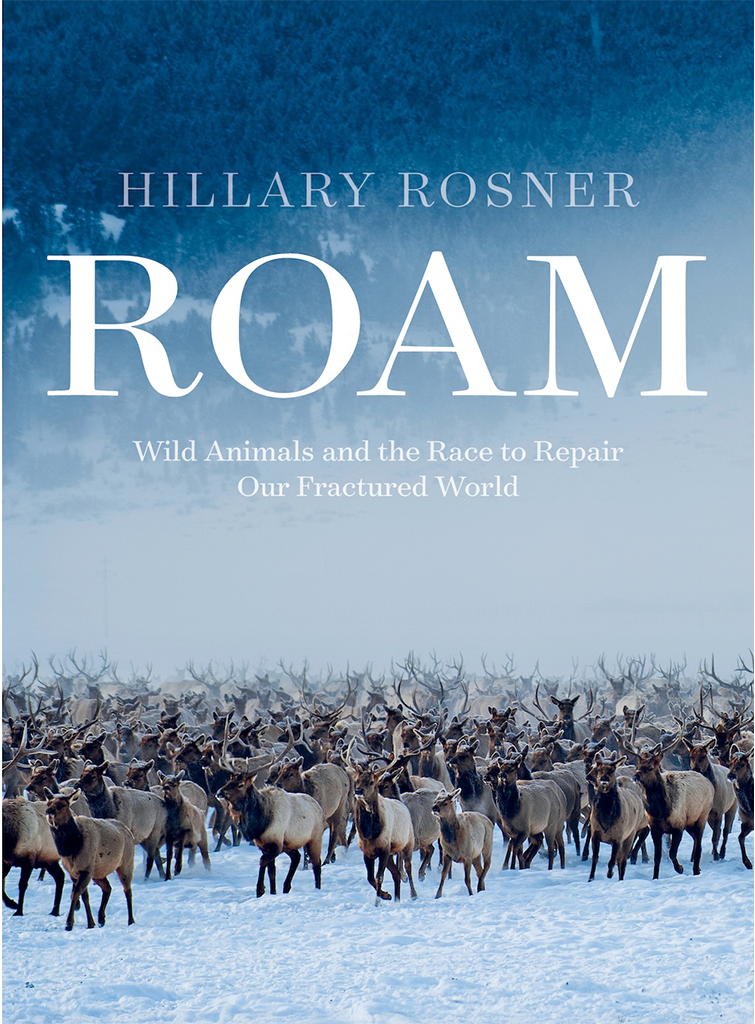
In Roam, science journalist Hillary Rosner holds off the tendency to view our modifications to the world as unchanging impediments to the movement of wildlife and by extension the space that nature needs to flourish. Yes, humans have swallowed up huge areas of land for cities and agriculture. Our roads lace through the landscape, splintering what habitat remains. And our literal thirst for water has driven the construction of such massive dams that make finding an untrammeled river a challenging task. Rosner’s prose instead searches for a path to strengthening connectivity and renewal for wild animals and, she argues, for ourselves.
6. Sea Change: Unlikely Allies and a Success Story of Oceanic Proportions
By James Workman and Amanda Leland

Along the Gulf of Mexico coast in the U.S., the waters lapping the shores of five states have long been heavily fished, to the point where key species populations have collapsed. Things started to change, though, when fishers began to work with scientists, environmentalists and regulators to solve the problem together, write author James Workman and Environmental Defense Fund executive director Amanda Leland in Sea Change. The “unlikely allies” they profile developed a system that’s now being used as a model for addressing overfishing, still a critically important problem facing the planet and the communities that rely on fisheries.
7. Hope Dies Last
By Alan Weisman

In his 2007 book, The World Without Us, author Alan Weisman imagines an Earth relieved of the pressures brought by humans. The essential lesson was to demonstrate how the planet’s land and waters could heal if given the chance. Now, with Hope Dies Last, Weisman confronts the great challenges to the support of life on Earth — the loss of species, climate change, and the intertwined impacts of how to grow enough food to meet the needs of such surging numbers of both humans and the livestock we’ve cultivated to feed us. But as the title suggests, his central focus is not just on the problems themselves. This time, he writes about the central role that people play in finding ways to do something about these crises, and, in doing so, make the planet more habitable for all life.
8. Holler: A Graphic Memoir of Rural Resistance
By Denali Sai Nalamalapu

The voices in Holler, in tandem with the images, ring out against the Mountain Valley Pipeline, which, if completed, would transport natural gas across the Appalachia region in the eastern United States. With it, activists say, would come the threat of polluting water sources and emitting carbon into the atmosphere. Denali Nalamalapu, a climate organizer, focuses on the resistance from underrepresented communities to the pipeline. More broadly, though, Nalamalapu reveals the possibilities and strength that can emerge through climate justice movements.
9. Is a River Alive?
By Robert Macfarlane
The “rights of nature” movement has sparked a reevaluation of what it means to be alive. The life-giving waters of a river, for instance, should they be considered living? Author Robert Macfarlane thinks through that question in his latest book, Is a River Alive? He draws on perspectives from disparate parts of the globe, including a river near his own home, to grapple with the importance of these waterways and the ways in which humans both diminish and uplift their right to exist and to flow.
10. Wildfire Days: A Woman, a Hotshot Crew, and the Burning American West
By Kelly Ramsey

Sometimes, a personal story can connect a reader to a crisis in ways that wouldn’t be possible if the details are left more abstract. With her memoir Wildfire Days, wildland firefighter Kelly Ramsey takes us into the teeth of the fires that now beleaguer the American West. Ramsey is clearly passionate about the landscapes in which she and her fellow hotshots work. The book also reveals an up-close account of the costs of humans’ impacts on the Earth and the often hazy path forward in finding ways to address them.